The Karen Read Jury Foreman Still Can’t Get Over the Missing Dog
Charlie DeLoach, Juror No. 1 in the state’s highest-profile modern retrial, talks about what actually happened in those deliberations.
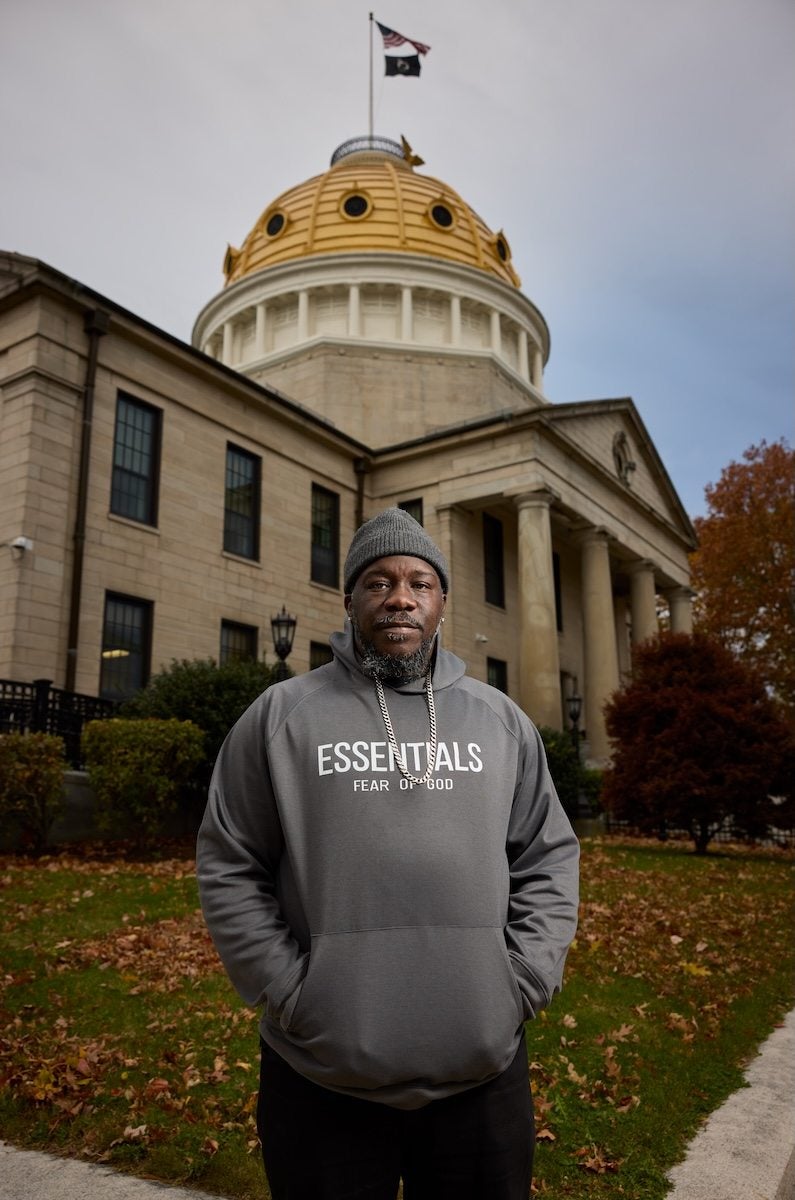
Photo by Ken Richardson
Charlie DeLoach never intended to serve on a jury, let alone one deciding arguably the state’s highest-profile murder case. An educator who grew up in the Bromley Heath public housing development in J.P., he’s spent more than three decades working with Boston kids and already had his hands full. But this past year, he found himself leading those deliberations after Judge Beverly Cannone tapped him as foreman in the second criminal trial of Karen Read, who was ultimately found not guilty of murder and manslaughter this past summer. As Read’s civil case ramps up, we sat down with DeLoach—and he didn’t disappoint.
What was your initial reaction when you got the jury summons? Were you going to try and avoid serving, or did you want to?
I was gonna do the old “Out of sight, out of mind” kind of thing. I had always tried to dodge it, so if they didn’t call me, or they didn’t come to my door knocking, they weren’t getting me.
So how did you become the foreman? How does that work?
I became the foreman because of Judge Beverly. She chose me. After they had their final statements and closing arguments, she said, “This is the time that I usually go over the law, and before that, I pick the foreman.” She said, “I select Juror One,” and I was like, “Okay.” She was like, “Oh, that’s a man who says yes before he even knows what he has to do.”
You had no idea what it entailed?
Not really. Actually, over the weekend, I looked it up before we started deliberating. We went in there around 2:20 p.m. [on Friday afternoon] for official deliberations, and probably by 2:45 p.m., all the evidence was in the room. Then we could finally talk about the case. I didn’t really know the true detail of it until the weekend.
What was the initial atmosphere like? Did you immediately take a vote? Did everybody declare what they thought, or did they keep their opinions to themselves?
We asked the question, “Does everybody want to vote now?” And a lot of people were like, “No.” So we started by looking at the evidence. And then I realized what a foreman does: organizing, keeping the process going, keeping the peace, and those kinds of things. Which is kind of what I do at work anyway.
I was going to ask if your work experience helped with being a foreman.
Oh, big time! Yes. Because I have to deal with a lot of different personalities all at once. So I had to figure that out. What I usually do is kind of stay low-key and just let whatever come my way and try to figure it out, instead of trying to be more aggressive about it. So I wasn’t like, “Oh, this is how we’re going to do it. This is how we’re going to lay it out.” And everybody was very helpful. When I felt like things were kind of going left or right, I’d try to reel it back in and make sure everybody was being heard, that everybody was listening when someone else was talking.
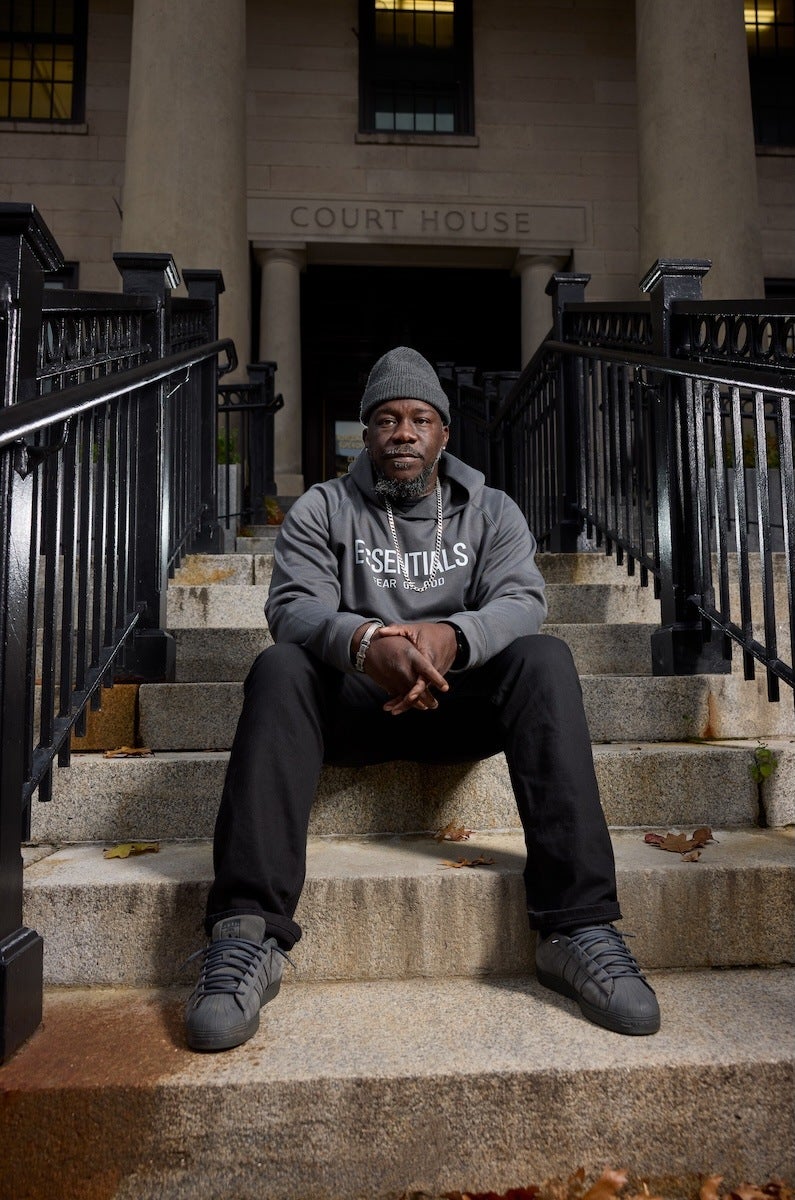
Photo by Ken Richardson
Did you all feel the public pressure, the people outside the courthouse watching and waiting?
You could see the presence of people outside. But did it sway the way I was going to determine my decision, or how I was going to vote? No, because I was just going to stick to the evidence and testimony and the stuff that went on in the courtroom. There was the pro-Karen group and the anti-Karen group, and I was like, “I get it. Everyone’s in an outrage.” But my job was to do whatever I could with what was in front of me.
How did you keep it all to yourself when you were with family or friends?
It was a lot of, “I just can’t talk about it.” That was my mindset because I wanted to be totally impartial in the decision that I made and make sure it wasn’t something coerced by someone telling me something. Boy, was I tempted to get on the Internet and just look up everything, but I was like, “I can’t. This is what they want us to look at, and there’s a reason why, so I’m just going to stick to it.” And then afterward, oh, was I surprised!
What did you find out afterward that surprised you the most?
Things from the first trial. We didn’t see the majority of the people that they called as witnesses. And I could see how the prosecution did not want us to see certain witnesses, how it would have skewed our judgment on things. And then just to hear everybody talking about what they thought happened inside the house, or what they thought really went on with John O’Keefe.
Were there any confrontations or raised tempers in the jurors’ room?
None whatsoever.
Wow! So everybody got along?
Yes, we did. It was comfortable to come to every day.
Were there any “Aha!” moments?
Well, I’d say the biggest thing for me was the [inverted] sallyport video [of Karen Read’s car being brought into the garage as evidence]. That was a real “Aha!” moment for me, for the defense. I was like, “Oh, now I see.”
How about the missing Ring footage from John O’Keefe’s house?
I was still open-minded; if the prosecution had something, I was open to seeing it. But the amount of evidence that was stacking up for Karen was getting higher. And then seeing the video of them putting the car on the tow truck, and the red light on the passenger side lit up, I was like, “Are we serious?” The exact piece that’s supposed to have been found in the snow is lit up. That gave me the insight that she didn’t hit him. And then all the other forensic people, not one definitively said, “This is how she hit him.” There was no consistent evidence, even with his injuries. Where was the bruising on his legs? There was none. So yeah, he could’ve got clipped, but to sustain an injury that makes you hit your head that hard, where you get a laceration to your skull? Come on.
Did Michael Proctor’s behavior or his texts factor into the deliberations at all?
No. I had to push past a lot of that, even though it was really, really unprofessional. I had to look at it as a lot of locker-room talk. Yeah, you have bias, but just because you’re biased doesn’t mean the person hit them or whatever, right? It just seemed like a bunch of unprofessional state troopers. But I couldn’t let that taint my opinion a certain way.
“I wish a lot of people were able to take the approach that I and the 17 other jurors took, how seriously we were seeking justice.”
Did the whole experience color your opinion of law enforcement, the judicial system, or police in general?
I mean, that’s two parts. One, I wish a lot of people were able to take the approach that I and the 17 other jurors took, how seriously we were seeking justice. Then there’s a regular Joe like me. I don’t have money like that to withstand two trials. There are going to be a lot of people worried that this is our justice system and how easily it can be swayed.
Did you and the rest of the jury think that there was someone else who could have done it?
I mean, I can’t say. There was something else that happened to him. We wanted to get into that part, trying to solve it. But that was not going to happen. I just made sure we stuck to the path so we didn’t go down all these rabbit holes endlessly. It wasn’t our job to solve the case. Our job was to look at the evidence and see if she was guilty of this crime.
Did Turtleboy help or hurt her case?
I didn’t know about Turtleboy until two weeks before the end of the trial. I didn’t know the impact of who he was. And again, they told me about Turtleboy, and I still didn’t look it up, so no.
What was the shadiest thing to you? [The Alberts’] Selling the house? The deleted texts? The missing dog?
The dog was probably number two. Number one was selling the house. Your family house? Like, why? And then you sold it for less than market value? What?
Ultimately, what made the murder and manslaughter charges not meet the burden of proof, while the operating under the influence charge did?
Well, if there’s no collision, there’s no manslaughter. No one felt that there was any evidence of that. We even wrote out the definition of everything. Reasonable cause. Manslaughter. OUI. We had all the definitions on the walls, so that anytime we got stuck, we could refer to them.
Are you still in touch with any of the other jurors?
Yes. We were supposed to get together for a reunion soon, but we all have each other’s numbers and everything.
Was there ever any intimidation involved? Did you ever feel like either side was a threat?
No, but there were a lot of journalists across the way, just looking at us. It wasn’t intimidating, but I just knew they were looking for any little thing, like, “Ooh, I saw a juror do this!” So I tried to stay stone-cold-faced, and my eyes were on the lawyers, or the witness, or the judge.
Is there anything that you’d do differently?
No, no. After looking at everything online and even just hearing other people, nothing really.
How has this affected your life?
In large part, it hasn’t really affected my life. Even during the trial, I still went to work if it was a day off from court. I was back working with the kids. I mean, certain people, friends, family, coworkers, and their wives want to know my input on things. “How did you feel about X, Y, or Z?” But other than that, it was just an experience for me. Looking at the judicial system, I realized it only takes a couple of people, and you can make anyone look guilty.
Throughout the process, how did you decompress?
Well, I go to the gym, and I watch TV. I play video games.
So what was the emotion when you finally reached a verdict?
It was such a sense of relief. And when I was finally able to say it, it was just mixed feelings, because somebody was gonna leave with a sour taste in their mouth, right? But at the same time, justice needed to be done, and I didn’t want someone going to jail who shouldn’t have.
Getty Images
By the Numbers
Trials & Tribulations
The Karen Read saga, quantified.
2
Number of criminal trials Karen Read faced for the death of John O’Keefe.
274
Number of days between the end of trial one and the start of trial two.
401
Number of people in the jury pool for the first trial.
1,000+
Number of people summoned for jury duty during the second trial.
49
Number of witnesses called in the second trial.
1,429,626
Amount, in dollars, the state spent on the second trial. (Tax dollars at work.)
1
Number of charges Read was convicted on, out of three. Operating under the influence. Not murder.
This article was first published in the print edition of the December 2025/January 2026 issue with the headline: “Juror No. 1.”