Squeezed to Death: Inside Boston’s Sandwich Generation Crisis
They’re trapped between young children with big needs and aging parents in decline, bleeding money at both ends. When did “having it all” turn into “doing it all?” A special report on the hidden crisis overwhelming middle-aged locals.

Illustration by C.J. Burton
They’re planning birthday parties while moving their parents across the country. They’re fielding calls from their kids’ daycare in the morning and their parents’ assisted-living facility in the evening. They’re potty training while adding adult diapers to the shopping list—all while working 40 hours a week to pay for it all. This is the sandwich generation—and it’s exactly as brutal as it sounds. This squeeze affects 23 percent of U.S. adults, with 65 percent of them finding themselves in this situation during their forties, according to Pew Research Center data. In Massachusetts, the balancing act is especially difficult given the high cost of, well, just about everything. We spoke to four local caregivers to learn how they navigate impossible logistics, financial strain, and emotional exhaustion—and how they’re juggling, or barely juggling, it all.
Tony Luong
The Impossible Balance
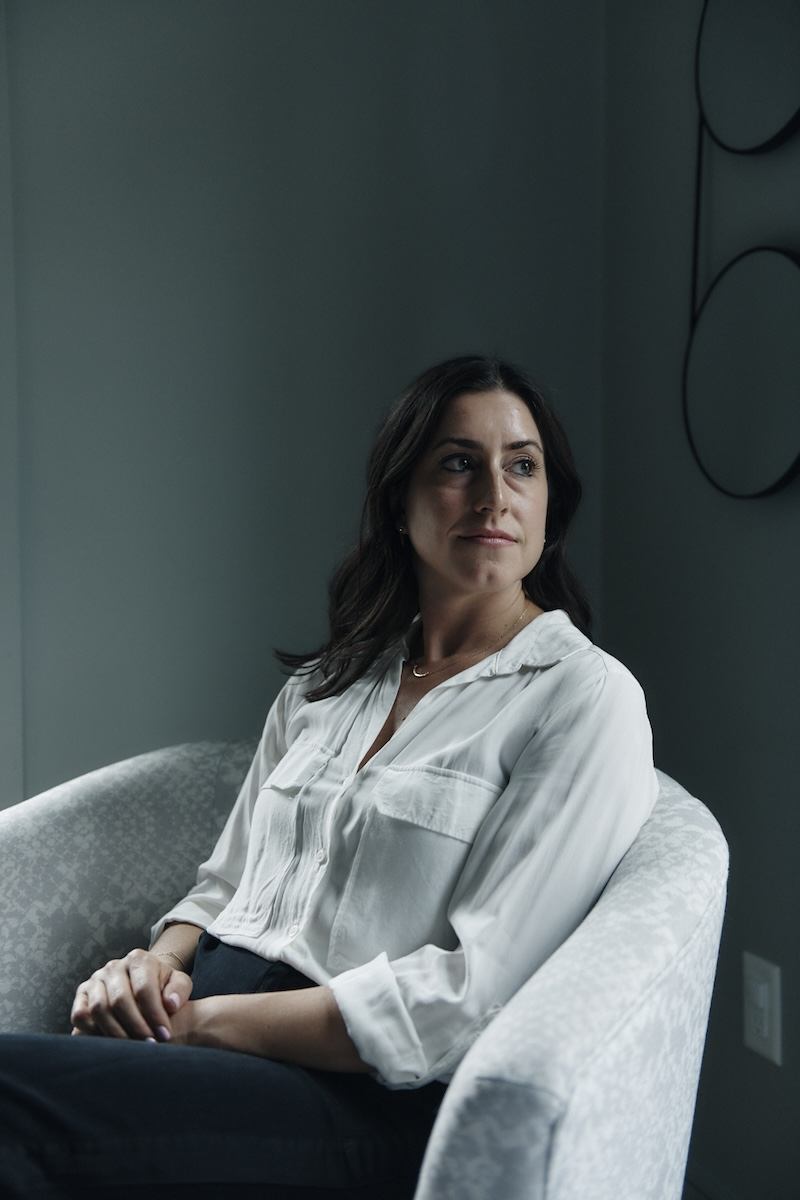
It was a Monday night about six months ago when Sarah Berkley hit her breaking point. She was prepping for a client presentation, the part-time nanny she’d hired for her three- and five-year-old was out sick, and she was being peppered with calls from her parents’ assisted-living facility about their medications and health. Overwhelmed, Berkley called her boss in tears and arranged a leave of absence.
But let’s rewind. It’d been a little over a year since her father’s Alzheimer’s diagnosis, and given that her mother had been suffering from Parkinson’s for about 15 years, her parents agreed to give up their homes in New Jersey and Florida to enter assisted living in Boston’s suburbs. They first moved into the facility closest to Berkley and her husband’s home, but Berkley wasn’t satisfied with the care there. The final straw at the first facility came when her father, admittedly a fall risk, had a small stumble and bruised his forearm. It was the facility’s strict policy that all medications, prescription and over-the-counter, be purchased and administered through its pharmacy provider.
Fed up with the red tape, Berkley smuggled her father a couple of Tylenol. When the caregivers found out, they offered an alternative to address her father’s minor soreness: They could happily administer morphine instead.
That whole incident seemed unbelievable, Berkley says, but the pressure she felt was very real, and during her tearful phone call with her boss, she let it all out: “I literally can’t do everything, I just can’t. I don’t know what to do. I can’t do all of this; I’m suffocating,” she told her. Luckily, Berkley’s supervisor, who was also a mentor and friend, and working for an insurance broker, was familiar with programs that could help. In Massachusetts, that meant paid family leave and short-term disability. “With my parents, my kids, and work, it was just like I was drowning,” Berkley says.
Berkley insists she is in a “fortunate position” because her parents have the resources to cover the cost of their own care, but is also clear that the stress involved with being part of the sandwich generation isn’t merely financial. Just minutes before we spoke, she was handling reimbursement paperwork and setting up speech and occupational therapy for her youngest child. Still on leave, she maintains a full schedule but says life has thankfully started to calm down. “Without work on my plate,” she says, “I have a little bit of time now to take care of myself, focus on my own mental health.”
Tony Luong
When Everything Falls Apart at Once
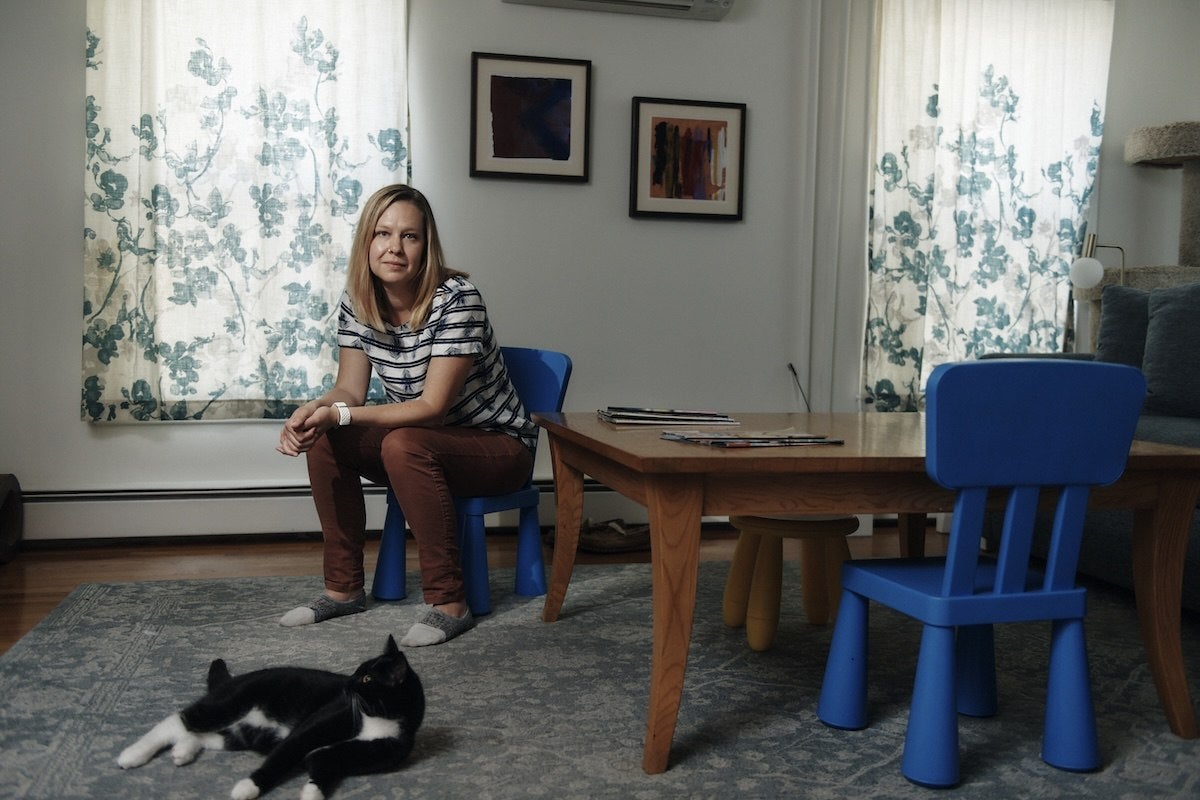
In mid-May 2024, Amy Scheuerman found herself in her aunt and uncle’s living room in the Bay Area, 3,000 miles from her Somerville home, sorting through Tupperware bins of old bills and attempting to catalog their various memberships and subscriptions. At the same time, she was working with her husband back East from afar, planning a combined fourth and sixth birthday party for her sons, both May babies.
In reality, the time bomb that blew Scheuerman’s world apart had actually started ticking 15 years earlier, when her father flew to California to move his parents closer to his childless brother and sister-in-law. “His plan had been to have his brother be in charge,” she explains. But during the visit, her uncle suffered a stroke and became incapable of caring for his parents, thus forcing Scheuerman’s father to relocate unexpectedly to the West Coast from Massachusetts to help them.
Scheuerman’s father remained in California after his parents passed, helping his brother and sister-in-law navigate health issues. When Scheuerman and her husband began having children, her father wanted to come home, but the pandemic and subsequent lockdowns got in the way. And then, another challenge: In the spring of 2024, Scheuerman’s aunt was diagnosed with aggressive uterine cancer and died soon after. “Only after she passed away did we realize that my uncle was getting pretty severe dementia, and my aunt had basically been covering for him,” she says. (This is the point in the story when Scheuerman shared a crucial tip: Have your older relatives make a list of their usernames, passwords, and phone-screen codes; Scheuerman did not have any of those, and canceling subscriptions and memberships became a nightmare.)
Being the only child born to either couple, Scheuerman became health proxy for her uncle, and, later on, preemptively for both of her parents as well. And that was how she found herself in the Bay Area, attempting to sell her aunt and uncle’s home and get their affairs in order before moving two aging relatives back to Massachusetts.
Still, the biggest time suck involved researching and identifying housing for two men requiring vastly different levels of care. Her uncle was put in a memory unit in Newburyport with many of his fellow veterans, and her father moved in briefly with his wife, from whom he’d lived separately for years, until Scheuerman found an apartment for him closer to her Somerville home.
As an involved parent, Scheuerman isn’t sure if her prolonged absence negatively affected her kids, but when she began receiving calls from her four-year-old’s school and afterschool programs about him biting, kicking, and hitting others, she couldn’t help but blame herself. While Scheuerman is quick to praise the virtues of Somerville schools and the city’s widely available afterschool programs, the calls required that she drop what she was doing and retrieve her son.
The constant drain on Scheuerman’s time wasn’t without consequences: Having already taken three months of unpaid leave to move her family members back East, the higher-ups at her company were losing patience with her attention being elsewhere. With Scheuerman on the verge of being put on a performance-improvement plan, she decided to transition from full-time employee to contractor. Eventually, they let her go, all while she incurred the additional cost of hiring a nanny for her son, who could no longer attend afterschool programming.
A year removed from the tumult of having everything go haywire at once, Scheuerman has a new job, and her father lives close enough that he can pick up her now-five- and seven-year-old from school. Scheuerman repeatedly refers to herself as one of the lucky ones, citing her good fortune of being happily married with insurance and having family members who were financially capable of supporting themselves. As tough as it’s been for her, she says, “In general we’re luckier than a lot of people.

Tony Luong
When Family Actually Works
On a Friday afternoon, Malette Lanier is cleaning the Spirithouse Music recording studio, one of several offices, banks, and other businesses that contract her cleaning services. She loves her job, mostly because she has the flexibility to look after her grandson, Takai, while her daughter works. Her daughter and grandson, ages 31 and four, round out the four generations living in Lanier’s 81-year-old mother’s home. Being so close to her mother gives her “peace of mind,” Lanier says, “because I’m there every day and if there is some decline mentally, physically, I’m going to see it. If I were living elsewhere, I might not be aware of what’s going on.”
Lanier knows the challenges of aging firsthand. During the COVID lockdown, she and her father, who lives nearby, had to figure out a new care plan for her late stepmother, who’d been diagnosed with Alzheimer’s and was rapidly succumbing to the disease. Because they no longer wanted to risk exposing her to outside caregivers, they decided to handle her full-time care themselves. “I would just go in the morning and help my dad get her up and dressed,” she says. “Then I would go back in the afternoon to help him change her, and then in the evenings to help him get her ready for bed.”
In many ways, Lanier was practically born into a caregiver’s role when her younger sister’s complicated delivery resulted in cerebral palsy. Lanier has been caring for her now-49-year-old sister for most of her life, always at home, and she doesn’t regret leaving her more traditional day jobs for the flexibility of running her own cleaning business.
Lanier is cautiously optimistic about her household’s future, though challenges remain. She has one more year watching Takai during work hours while her daughter works at a Lasik surgery office before he starts preschool in 2026. She and her mother also talk openly about future care needs now that her mother is in her eighties. “She told me once that if it became necessary to put [my sister] in a home, that would be fine, but I don’t see that happening,” Lanier says, adding, “She knows she has family she can count on. One hand washes the other—it’s family, it’s what you do.”

Tony Luong
The Great Role Reversal
Ever since her father’s 2016 death in their home state of Michigan, Somerville attorney Danielle Kinkel knew the clock was ticking on her mother’s inevitable relocation to Massachusetts. And tick it did: By 2019, her mother had moved into the first-floor unit of Kinkel and her husband’s multifamily home, where they lived on the second and third floors with their two young kids.
Because Kinkel’s mother had been a fierce careerist who postponed having children until later in life, the odds were high that she would need care while Kinkel was still raising her own young family. The Filipino immigrant and doctor had become a leading clinical psychologist and the president of the Michigan Psychiatric Society before winding down her career.
When her mother moved East to live with them, Kinkel’s life didn’t stop—but at that point, her mother was still healthy. Now, Kinkel is beginning to question whether her mom is still capable of living independently, especially after learning she has Alzheimer’s. The diagnosis confirmed what Kinkel and her husband had already suspected after her mother fell victim to an online scam. The scammers had instructed her to withdraw cash and deposit it in a local bitcoin machine, demanding that she not tell anyone.
Kinkel says she hadn’t anticipated how the living arrangement would shift their dynamic. Before, mother and daughter were both so busy they sometimes didn’t speak for months. Now her mom monitors her every move. “It’s like being watched, trying to navigate this weird space of being an adult and an adult child,” she says. “I am the adult to my adult parent, and sometimes I feel like I’m being catapulted back to being 17 and trying to sneak into my own home after midnight.” Conversely, her mother still has a car in the driveway—though the keys have been taken away—and has recently been caught trying to sneak it out. “The whole thing has gotten turned on its head,” she says.
Fortunately, the CEO of Kinkel’s organization has been sympathetic to her plight. Even so, Kinkel struggles as an active member of the sandwich generation shopping for long-term care for her 84-year-old mother. Her advice? Plan ahead and have the difficult conversations before you’re in crisis mode. And if you don’t have all the answers, don’t be afraid to ask for help.
This article was first published in the print edition of the October 2025 issue with the headline: “Squeezed to Death.”