I’m a Rapper Who Starred in “The Town.” Then Addiction Nearly Killed Me.
A Boston kid became a Hollywood actor and an underground rap legend, then watched it all disappear. He’s since returned to the streets that raised him, trying to save the ones still fighting the same disease that nearly killed him.
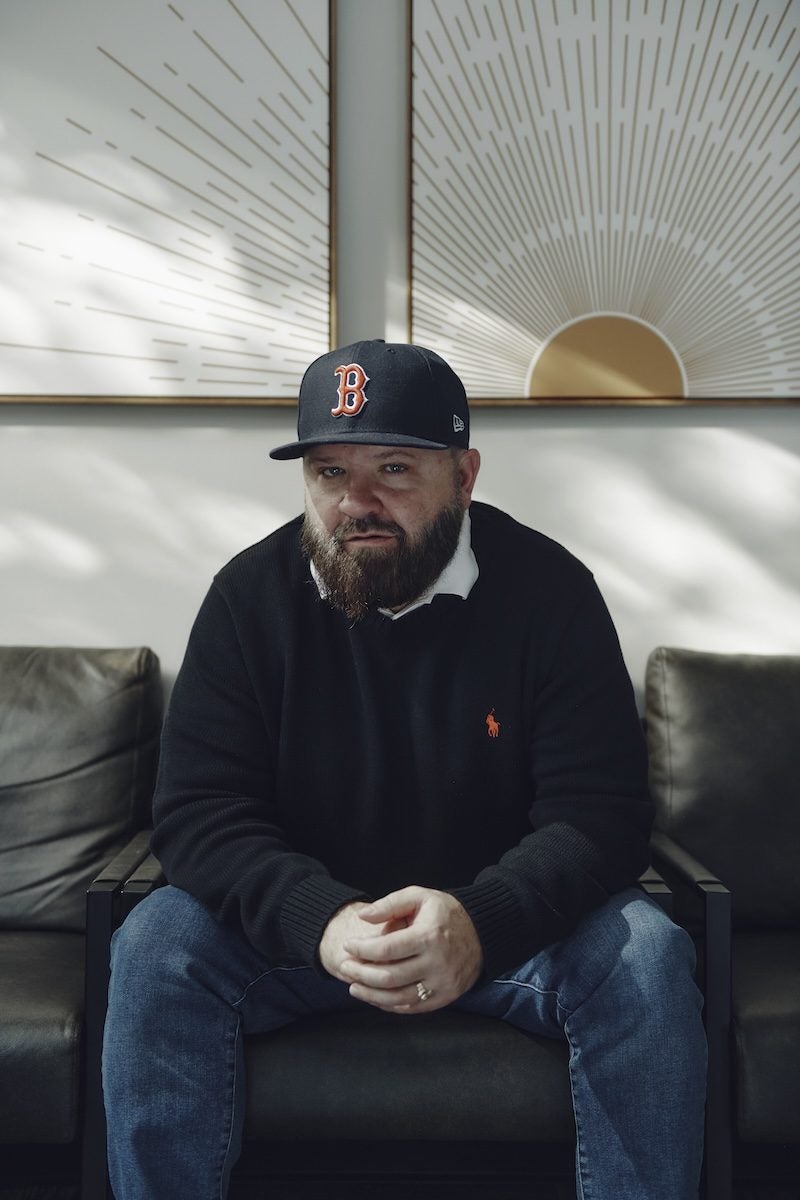
Photo by Tony Luong
Coming to at 3 a.m. after blacking out halfway through snorting a line is an unpleasant cardiac experience, to say the least. And it was only made worse by the fact that a lunatic was pacing the room, his nose bleeding and his heart pounding beneath his sweat-soaked T-shirt. I’d known plenty of gangsters—some would scoff at my calling this guy one, but this wasn’t the time for semantics. He was deep in cocaine psychosis, and he had a gun. Three days of whiskey and coke always end in madness. This one closed with me, the lunatic, and the demons only he could see.
When the gun turned on me, my sprint for the door ended with a brutal kiss from the sidewalk that tore the skin off both palms. I bounced up and kept running, heart pounding to the edge of explosion. If cocaine came with a prescription label, it would read, Warning: Do not sprint.
That night wasn’t an outlier. It was my world. I came of age in the shadow of Boston’s opioid epidemic, where hip-hop became both my escape and my weapon. The underground drug culture shaped my language, my dreams, and my music. And also, my finances. The only way to get enough money together to make an album was to partner with, let’s say, gentlemen who traffic in large quantities of dry goods. That came with its own pitfalls and dangers: The lunatic in question that night was one of them.
That was the last time that I ever saw him, but a week later, the studio where I had been recording, and where I’d racked up a large debt, was robbed by gunmen to steal my masters. After that, I slept with a borrowed gun in my empty South Boston apartment, watching cars circle O Street. I knew at that moment that I was in over my head, and I desperately needed a miracle.
I soon got one. In 2004, a year after that crazy night, I released my first mixtape. It moved through the streets like contraband, passed hand to hand. The drums and fractured lyrics were both a celebration of the lifestyle of addiction and a memorial to the many lives it claimed. Before I knew it, I had what every young artist wants but few ever get: buzz. In 2006, the Boston Herald ran a feature on me. At the time, I was squatting in a warehouse near Mass. and Cass that had no electricity, heat, or hot water. The night before the article hit the newsstands, I was partying in an after-hours bar, where I would go to get drunk and charge my phone. At 7 a.m. I stumbled outside to a gas station, bought copies of the papers, and then went home, where I passed out on my mattress before I could even read the story.
Chaos had carried me to this place, and chance was about to carry me out. When I woke up at 3 p.m., my phone lit up with missed calls. Ben Affleck was trying to reach me. He was casting Gone Baby Gone and wanted me to audition.
After I got the role of Bubba Rogowski, everything shifted. I had gotten back together with my high school sweetheart, we married, bought a house in West Roxbury, and had a son. I signed on to make a record with my boyhood idols, House of Pain, and soon I was touring the world to sold-out crowds with our supergroup La Coka Nostra. I collaborated with legends Snoop Dogg, DJ Premier, and Cypress Hill. Ben cast me again, this time in The Town, which opened as the number one movie in America. For a while, it felt like this was it. I was living the dream.
It was only a Cinderella story until midnight hit, and the magic died. My marriage was fracturing under the weight of my addiction. On stage, I was annihilated. My shows had turned into a sideshow. I told myself it was part of the act, but my bandmates knew better. They weren’t impressed anymore. Confrontations among us became common, and sometimes they asked me to travel alone.
I was drunk on the set of Killing Them Softly and later passed out with a vodka bottle on the roof of the Omni hotel in New Orleans after shooting a scene with Brad Pitt. Shame. The whispers started in the film industry: He’s talented but crazy. In that world, no one says it to your face. The phone just stops ringing. It made sense. I belonged in detox, not on a Hollywood movie set.
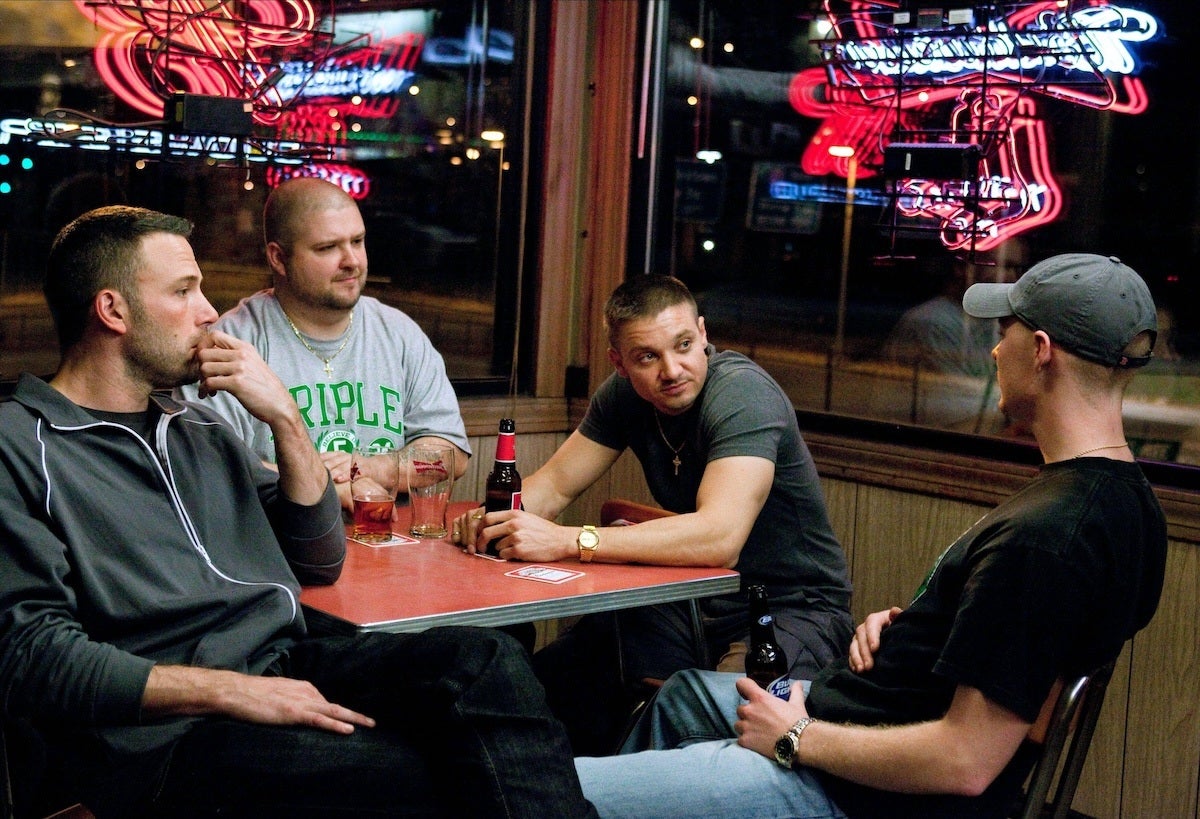
George Carroll’s success as a rapper led to roles in movies, including The Town. / Photo by AJ Pics / Alamy
I grew up in a neighborhood that doesn’t really exist anymore. In the late 1970s and early ’80s, Lower Mills in Dorchester was an Irish-American, working-class stronghold where it felt like there were a hundred kids on my block. I got my ass kicked regularly. My head bounced off the sidewalk. Someone ripped the tire off my Dukes of Hazzard Big Wheel. I got an early look at alcoholism on every street corner before I even knew the word.
Despite the mayhem, it was a good childhood. My friends and I ran the streets until the lights came on, with scraped knees and Kool-Aid mustaches, calling out “Ollie ollie oxen free” like it meant we were safe. Like no matter where we hid, we could always come home. My father was a Boston Public Schools teacher, and my mother worked at the famed Dorchester florist Cedar Grove Gardens. I had two parents who loved me, and I couldn’t imagine anything ever coming between us.
That feeling didn’t last. I learned young that families break, people suffer from mental illness, and sometimes they don’t get better. I remember pressing my forehead to the glass of an ’83 Chevy, waving goodbye as I drove away from Dorchester. My parents split up, and for the rest of my childhood, I bounced between their houses. I had to learn how to find family on my own.
I found it in two friends I met in ninth grade. Erica was my first real love, the woman I’d go on to marry. Her family took me in when mine was falling apart. Their house had the kind of stability I couldn’t find anywhere else. She was the best part of my youth. Mike was my best friend and the big brother I never had. Hip-hop was our soundtrack: Wu-Tang Clan, Gang Starr, House of Pain. I was already writing rhymes, though nobody knew it yet. Together we learned to drink, get high, and throw punches as if they were rites of passage.
But nothing gold stays. The nights got longer, the drinks stronger, and the fights meaner. As the opioid epidemic gripped the city, my friends started dying or doing prison time. The streets became both playground and war zone, and I couldn’t tell the difference anymore. I was chasing something I couldn’t name. Pride. Power. Numbness. I guess it was whatever filled the empty space that used to feel like home.
Mike and I started on the same ride, but while I leaned on booze, cocaine, and benzos, he chose heroin. In our early twenties, we shared an apartment in Southie that we rented from my uncle. One day, I came home, and the furniture was gone. Mike had sold it all because he was dope sick. Not long after that, he was hauled off to detox—his first of what would become countless trips.
I, too, would be on the detox train soon enough. My career had spiraled into chaos. My marriage, to a straight-laced non-drinker, began cracking.
Paranoia ran my life. I thought everyone wanted me dead. When a fan came running for a photo, panic hit first. Once, on Newbury Street, I dropped a guy before he could even speak. Turns out he just wanted to tell me he loved me in The Town.
Erica pleaded with me to get sober for the sake of our marriage and our son. I tried with every ounce of my being to make that happen, but I just couldn’t do it. Before long, I was back in detox once again—and I came out that time knowing another relapse would mean I’d be out of the house for good.
What I didn’t know was that benzo withdrawal doesn’t end on day three. The mental torture stayed with me. My thoughts skipped like a scratched CD. I didn’t sleep for more than 15 minutes at a time for weeks. There was just sweat, confusion, and anxiety. I was swallowed whole by fear.
On day 27 out of detox, I stopped by a liquor store on my way to the recording studio. I was set to make my first solo album, something I’d worked for my whole life. I needed the magic. But I didn’t know how to create sober; I’d never done it.
I set my bottle of Grey Goose on the monitor and told my producer, Lou, “Don’t let me drink this, unless I can’t write.” I couldn’t write. I drank it. Then I hit the drug spot on the way home and got good and high. At 7 a.m., I walked through the door of my house. My wife was standing in the kitchen. “Get out.” That was the last day of our marriage.
The next two years took me to lows I can barely describe. I screamed at my son’s mother that I deserved overnight visits, but the truth is, I wasn’t fit. I saw him only under supervision at 4 p.m., usually the only hour I drew a sober breath. I spent more time in L.A., but I wasn’t getting work. I frequented bars and after-hours clubs instead. Panic attacks were constant. I was so terrified I’d drop dead when using that I’d get high on a bench outside the ER in East Hollywood. At least there, I figured, someone might be able to save me.
That December, I flew back to Boston to see my son. I visited him on Christmas Day and told him, “I’ll be there tomorrow.” Tomorrow never came. I was on a bender and had a concert in Philly. I chewed through a bag of MDMA and collapsed after the show. On January 2, 2014, I finally called my ex-wife. “George, do you have any idea what you’re doing to our son?” she said. “You left him waiting on the steps. He said, ‘Mommy, Daddy tricked us again.’”
I had hit thousands of bottoms. I’d faced endless consequences and gotten far too many second chances. None of it was enough. I still wore the lifestyle like a badge of honor. But this was different. When my little boy said those words to his mother, something broke inside me. I knew that nothing—not movies, not music—mattered if I didn’t have a relationship with him. I knew I had to get sober for my son.
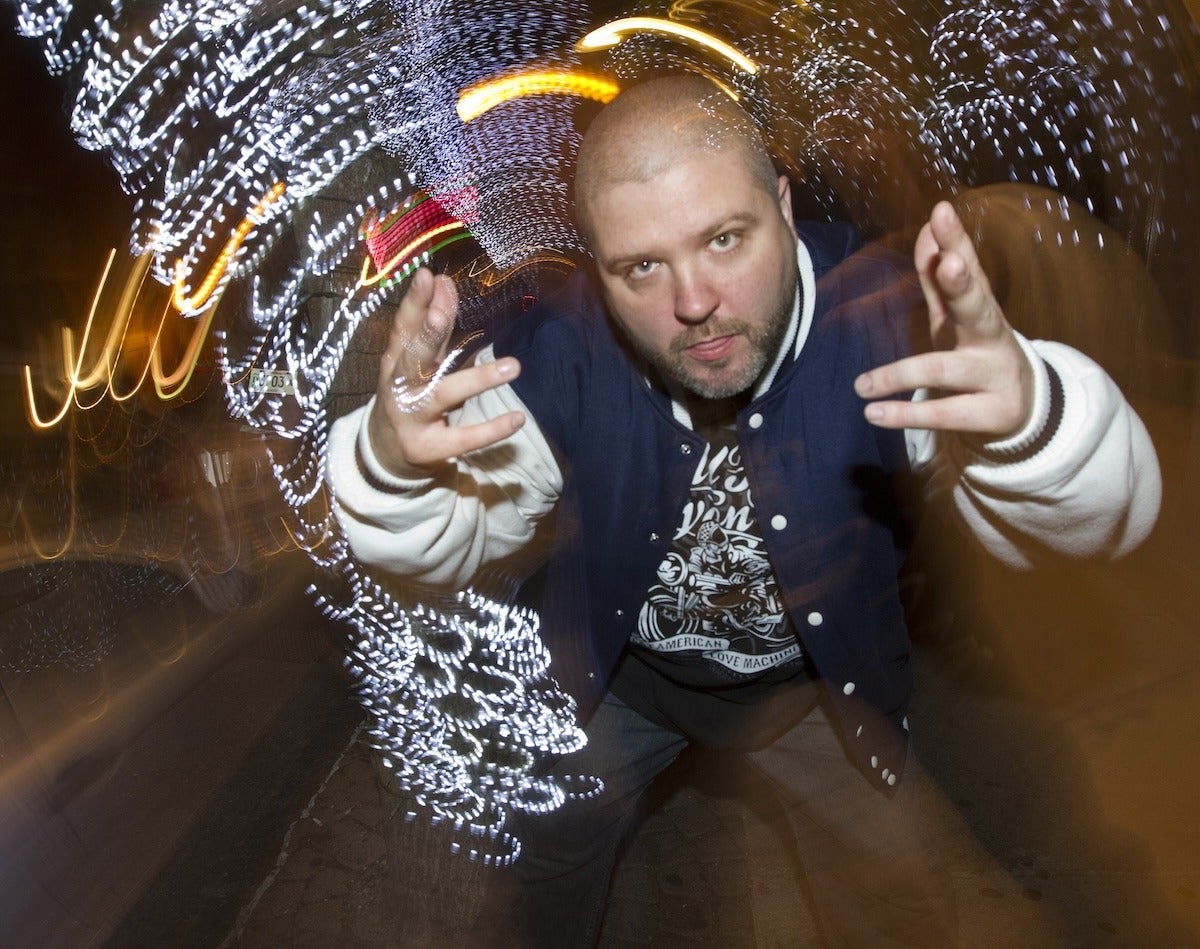
The author in 2011. / Photo by Matthew J. Lee / The Boston Globe
I wish I could say I got sober that day. I didn’t. I stumbled through two more miserable months because I didn’t know how to sit with a feeling like that—how dark the night gets before dawn. On March 3, 2014, I walked into a 12-step meeting at the Comedy Store on Sunset Boulevard. I wasn’t new to meetings; I’d been ducking into them since I was 18. I had only once managed more than 30 days sober.
Now I was 36 years old and felt like my life was over. This will never work for me, I thought. But I had nowhere else to go.
I learned what they meant by “one day at a time.” I climbed out of that hole one step, one breath, and one slow day at a time. My body and mind yanked at my soul, begging for booze and drugs. Nights were endless. I was enveloped by doom, praying sleep would save me and I’d wake up different. “This too shall pass,” I whispered until the mantra numbed me. In hindsight, I should’ve been in a medical detox. Upon further review, I should have been dead.
When most people picture a spiritual experience, they think of a white-light moment. Mine wasn’t that. It was messy and painful, full of tears and hard truths. Over time, I learned acceptance, faith, community, service, forgiveness, and how to clean my side of the street. Through these principles, I have found a new state of grace. It’s carried me through the highs and lows of life. I have not picked up a drink or a drug in almost 12 years, something that’s allowed me to build an amazing relationship with my son. My son was too young to remember the way I was before I got sober. What he does remember is that I showed up for all of his baseball games.
Erica and I have co-parented our son successfully for years, and I’m grateful to call her one of my closest friends. Early in my sobriety, she married a good man from a big Greek family. They have two kids. I spend a lot of holidays with them. They call me “Uncle George,” and I love those kids like my own.
I found my own love story with Kristina, whom I met in 2016 and got engaged to last Christmas. I’ve become a stepdad to her girls, and they bring so much light into my life every day. A few years into my sobriety, I was still telling myself the sad story that I lost my family in active addiction. I’ve since come to a different perspective. I didn’t lose it at all; it just changed shape.
I did, however, lose my best friend, Mike. At 6:30 a.m. on the morning of October 1, 2017, I got the call that he was gone. He was 44 days sober before his fatal relapse. He was doing well this time. I know because I was his sponsor. I’d seen the lights come on for him. It was like old times, the way we laughed and talked about life. When he passed it left a fracture in my heart that will never fully heal. As kids, we fist-fought as a rite of passage; as grown men, we had a different fight, but we always fought together and for each other. That’s how I’ll always remember my friend. He was my biggest advocate.
This is the hardest part of addiction: the hope. We hold onto glimmers of it in between the long stretches of brutality while the disease takes its toll. Mike’s family loved him and did everything in their power to help him. I pulled every resource and tool I could. The truth is that he did his best, too. And still we lost our boy. My faith in my ability to help anyone else was shaken. So for a long time, I didn’t.
Service is a crucial part of staying sober, and that isolation almost broke me. A couple of years later, during a moment when I feared I might relapse, I did what I had been taught and spent the winter with a church group handing out food, jackets, and clothes at Mass. and Cass. The first time I stepped into a tent, it shook me to the core. People were openly smoking crack and shooting dope. The suffering was overwhelming. I walked out with tears running down my face.
Still, I kept showing up at this intersection, just blocks from where I had once been pulled out of obscurity by a barrage of phone calls from Ben Affleck. Maybe it was amends to Mike, or a debt I owed to the community that raised me. Whatever it was, it felt right. It felt like I had found my true purpose.
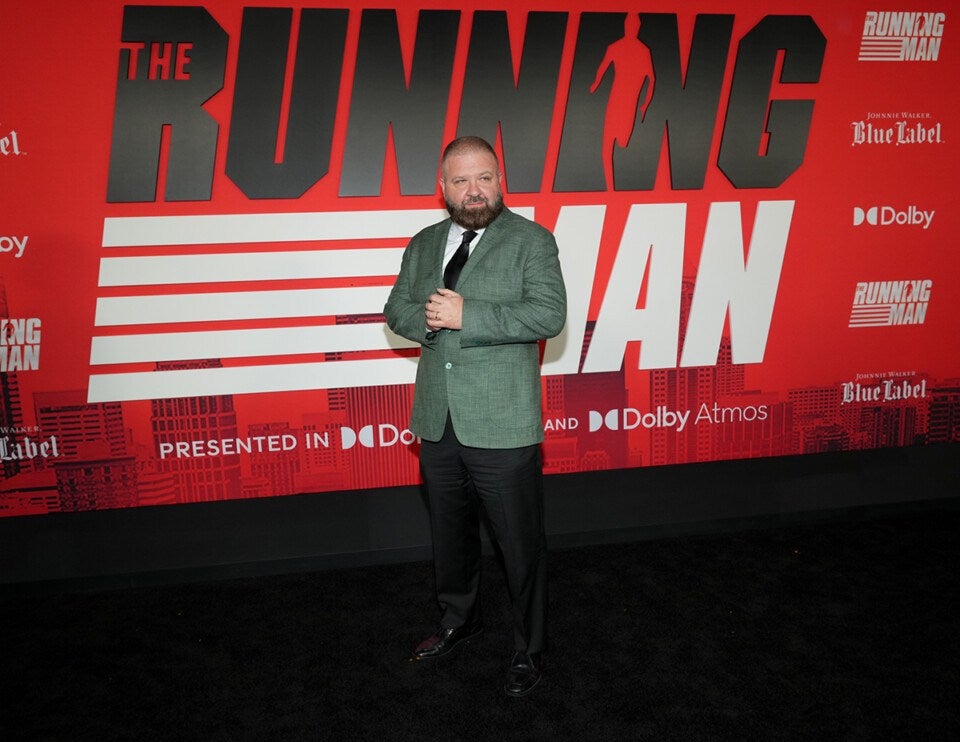
Carroll at the New York City premiere of Edgar Wright’s The Running Man, the Glen Powell-starring film in which he appears as Agent Dugg, on November 9. / Photo by Jason Mendez/Getty Images for Paramount Pictures
There’s a buzz that moves through the building at Charles River Recovery, the Weston treatment center I cofounded in 2022. I remember when it was just an empty shell, when we were still sketching ideas and dreaming about what it could become. Now, when I walk through, it’s alive with staff and patients who’ve come here for help.
Through a series of events I can only describe as guided by something greater than me, the chance to cofound and help lead this place was put in my path. We’ve run the facility for more than three years now and helped more than 7,000 people find a way forward. People like me. People like Mike.
In 2024, I opened Grand Rising Behavioral Health, an outpatient program in Norwood that focuses on mental health and the deeper causes of addiction. Between both programs, we have about 170 employees. I don’t think of them as working for me; they work with me for something we all believe in. To say it is rewarding is an understatement. I’m inspired every day by seeing people get well.
I think of my own journey and realize that if I’d never experienced the lowest of lows, I wouldn’t have had the opportunity to do any of this work. I understand that my life’s bottoms have made me uniquely qualified to help someone else.
Countless others are still battling addiction. Many of them have been lost in the crisis on Mass. and Cass and in cities across America. These are people’s sons and daughters. I may have made it through the darkness, but I’m just one story among many in the Boston community that raised me.
My name is George, I’m an alcoholic, and I finally found my way back home.
This essay was first published in the print edition of the December 2025/January 2026 issue with the headline: “Coming Home.”
Previously
- Person of Interest: Slaine
- The Interview: Crime-Fiction Writer Dennis Lehane