Lab-Grown Diamonds Are Having a Moment
Millennials and Gen Z shoppers are helping drive demand for ethically sourced stones that look identical to mined diamonds—at a fraction of the cost.
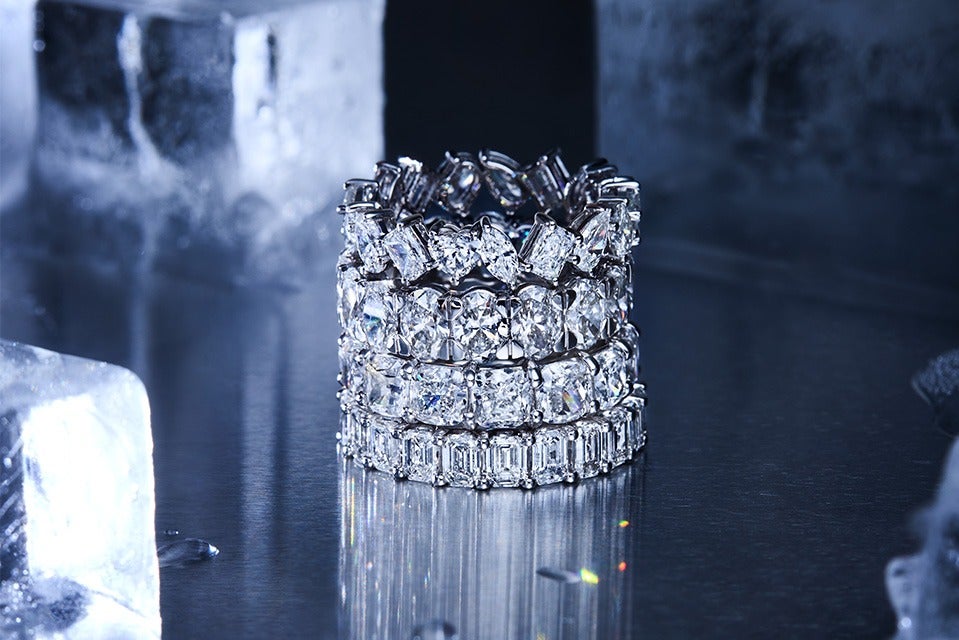
A stack of Boston Diamond Company’s PureLux Lab diamond bands. / Photo by Steph Larsen / Styling by Madison Trapkin
Boston Diamond Company founder and CEO Stephanie Binder didn’t set out to follow trends. A second-generation jeweler who grew up visiting her mother’s 150-square-foot shop, she trained in Los Angeles and New York before becoming a gemologist herself. So when lab-grown diamonds started making headlines more than a decade ago, she wasn’t rushing to stock them. “I was hesitant,” says Binder, who opened her Newbury Street boutique in 2022, following her first location downtown. “There was just so much mass production coming out of India and China. The quality didn’t meet our standards.”
After extensive research, Binder now not only carries lab-grown diamonds—which have the same composition, structure, hardness, and optical properties as mined diamonds, without the dangerous working conditions—but has also designed an entire line around them. Her new PureLux Lab collection features icy D- and E-color stones with flawless to VS clarity—essentially, the best of the best. “We only carry lab-grown diamonds that are grown slowly and carefully to mimic the natural growth process,” she explains.

Founder and CEO Stephanie Binder. / Photo by Russ Mezikofsky
Binder isn’t the only one in Boston embracing the lab-grown diamond market, which is expected to reach $57 billion by 2032. Another New England maker, Cove Jewelry, known for its minimalist styling and focus on ethical sourcing, recently debuted its Americana Collection, featuring not just lab-grown diamonds but also vibrant lab-grown sapphires and rubies. Meanwhile, Brilliant Earth, a national brand with a Back Bay outpost, continues to draw a loyal following with its expansive lab-grown diamond selection and transparent sourcing practices.
Sourcing is just as important to Binder and her team of gemologists, who put their lab-grown diamonds through the same scrutiny as the mined variety. “We assess every detail—scintillation, haze, body color—things the average consumer doesn’t see but definitely senses,” she says.
That attention to detail is a double win for customers: Not only is it impossible for the average person to tell the difference between the shop’s mined and lab-grown diamonds, but the manmade stones also cost significantly less than their natural counterparts—sometimes up to 85 percent less. And Boston’s younger shoppers are taking note. “Millennials and Gen Z are our biggest lab-grown buyers,” she says. “They want ethical sourcing, but they also want to design their dream ring without blowing their budget.”
In addition to engagement rings, Binder’s PureLux Lab includes tennis necklaces and bracelets, eternity bands, and statement studs—designed by a woman “with women in mind,” Binder says. “How they want to feel. How they want [their jewelry] to wear over time.” Because even lab-grown diamonds are forever.
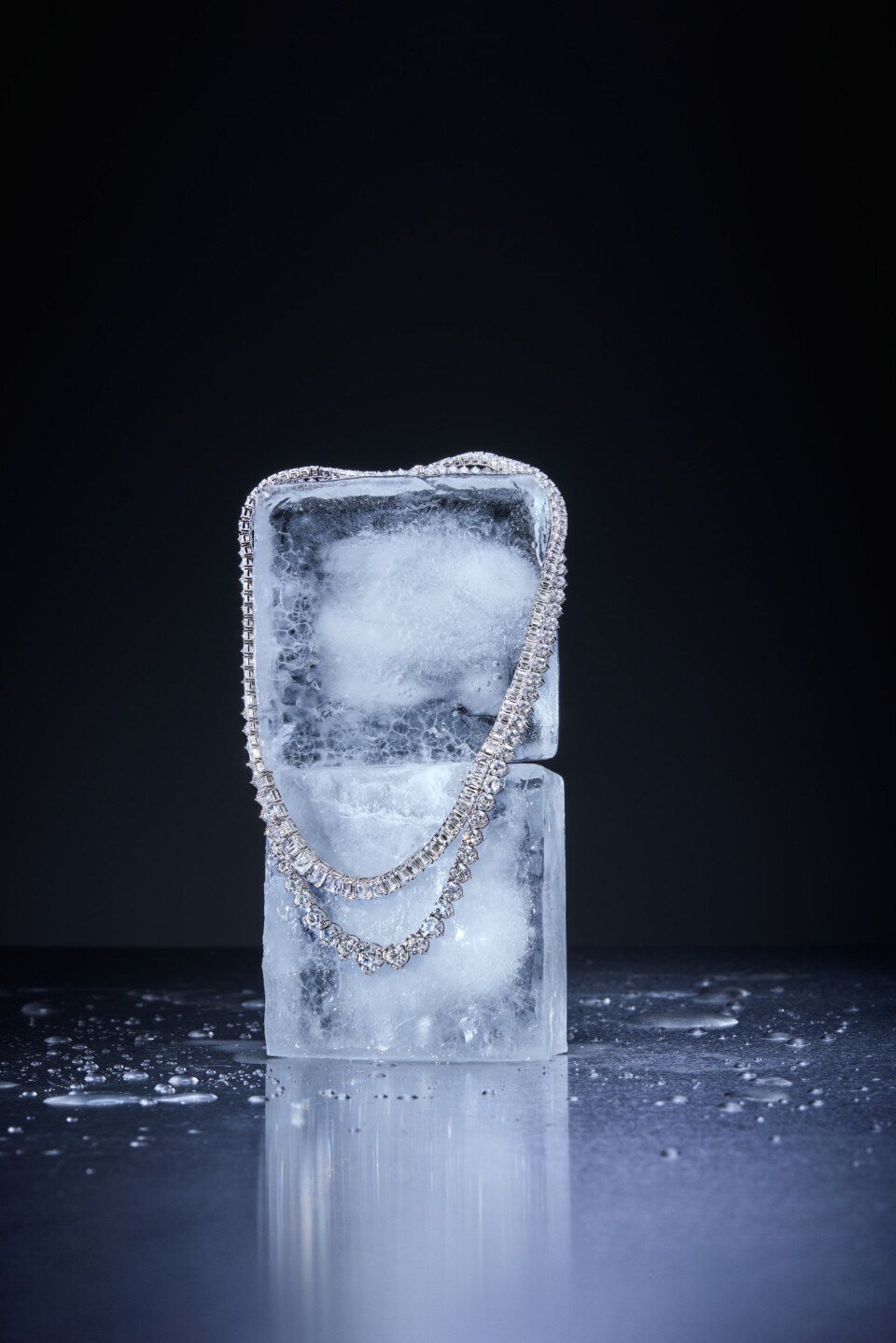
Two of Boston Diamond Company’s PureLux Lab 18-karat-white-gold tennis necklaces with diamonds. / Photo by Steph Larsen / Styling by Madison Trapkin
This article was first published in the print edition of the June 2025 issue with the headline: “Ice Factory.”