The Dark Side of Biohacking
There’s an old adage in medicine: The dose makes the poison. Translation? Even healthy things become dangerous if overdone—and the quest for longevity is no exception. Welcome to the longevity trap.
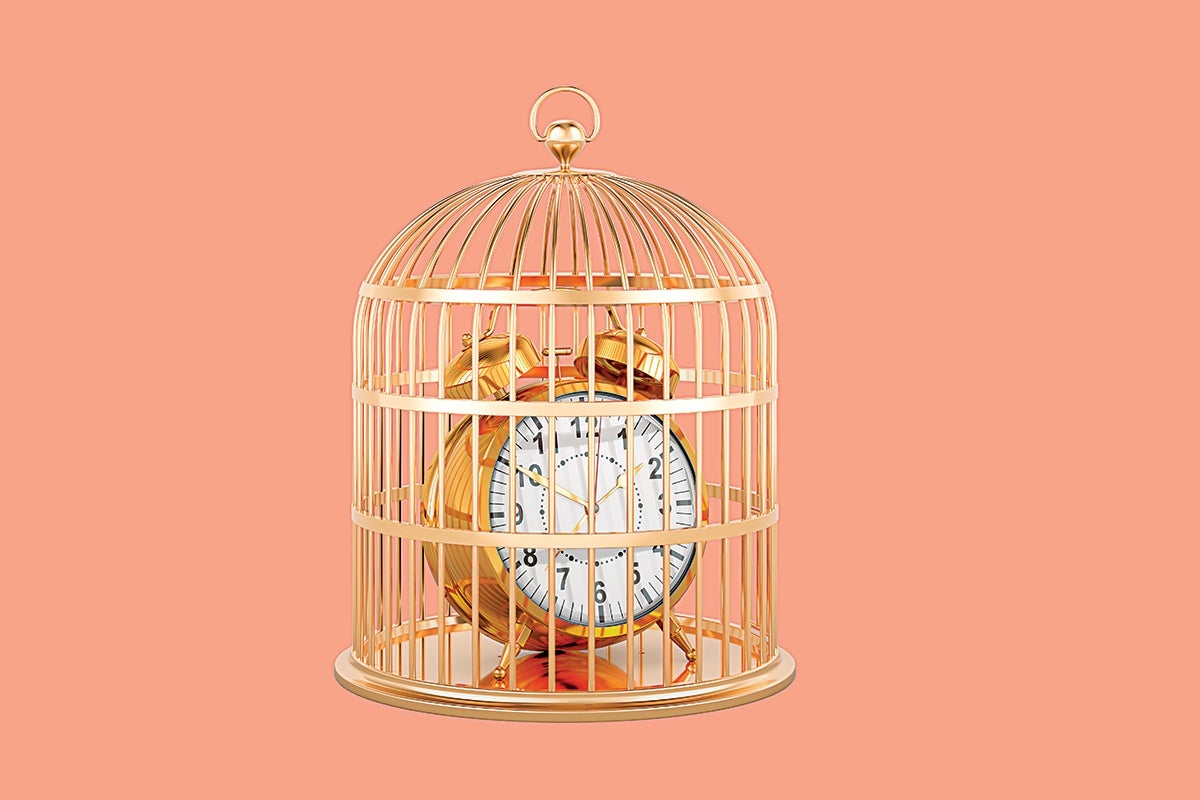
Illustration by Benjamen Purvis
This is part of a series on longevity in Boston.
There’s an old adage in medicine: The dose makes the poison. Translation? Even healthy things become dangerous if overdone—and the quest for longevity is no exception. What starts as a desire to live longer can easily spiral into obsession, stress, and dangerous therapies. Here are some of the risks to taking this all too seriously.
The Psychological Toll
Paying attention to what goes into your body is all well and good. But if you’re so fixated on optimizing every meal that you can’t enjoy your own birthday cake, things may have gone too far. “Being able to break the rules, on occasion, is just as important as following the rules,” says Ipsit Vahia, chief of the Division of Geriatric Psychiatry at McLean Hospital.
Don’t underestimate the power of a joyful life—or the toll of a rigid one. One 2020 study estimated that heavy stress can shave almost three years off your lifespan. On the flip side, mindfulness, specifically the ability to stay grounded in the present, may help promote healthy aging by reducing stress and anxiety, Vahia says. “There is a certain irony to being so preoccupied with staying healthy that you cannot live in the moment,” he says. “It increases the likelihood of the things you don’t want.”
And here’s the elephant in the room: No matter how carefully you optimize, you will not live forever. Accepting that is an important psychological milestone, Vahia says. And, as with most things in life, that wisdom tends to come with age. “You don’t hear a lot of older people talking about wanting to conquer death,” he says. “That talk is mostly the domain of people in their early or midlife.”
The Extreme Edge
For a certain subset of longevity warriors, NAD+ infusions and off-label rapamycin barely register as extreme. Boston-based concierge primary care physician Jay Luthar has heard it all. Some people are taking clandestine trips abroad for gene therapies unapproved in the United States, such as those meant to boost production of anti-aging proteins. Others are dropping thousands on off-label plasma-exchange therapy—a procedure where doctors remove your old blood plasma and replace it with fresh fluid, theoretically resetting your body to its youthful prime.
Risk-taking in pursuit of a longer life is nothing new. Just look to the human growth hormone (HGH) craze of the 1990s and early 2000s, says Thomas Perls, director of the New England Centenarian Study at Boston University. Even though HGH is illegal to prescribe off-label—and linked with increased risks of cancer, heart disease, diabetes, and other serious complications—that didn’t stop people from trying to get their fix.
The difference is that today’s biohackers have 24/7 access to the underbelly of the anti-aging world, thanks to the devices we’re all glued to constantly. A network of dubious telehealth clinics, compounding pharmacies, and direct-to-consumer websites makes it almost too easy to buy all kinds of alleged anti-aging therapies. Take peptides, a wide-ranging class of amino acids that includes synthetic hormones, GLP-1 drugs, and experimental compounds like epitalon. Many are not approved for medical use, yet “unfortunately, people are buying them online,” says Katherine Lantsman, a functional medicine doctor who practices in Brookline. Welcome to the DIY longevity underground.
It should go without saying that legit doctors discourage this kind of daredevil behavior. Luthar would much rather his patients stick to the evidence-backed basics, rather than go extreme. “Do they actually want longevity,” he wonders, “if they’re willing to take that level of risk with their current health?”
When It Gets Dangerous
Good luck getting proper treatment when your doctor hasn’t even heard of the pill you just swallowed. The risks of radical longevity seeking aren’t only theoretical for Matthew Mostofi, an emergency medicine doctor at Tufts Medical Center. In his ER, he’s seen the consequences firsthand. Patients have taken untested supplements, traveled outside the country for shady stem cell injections, and everything in between. “Oftentimes, since we don’t know a lot about it, we don’t have records, and it’s not approved, it’s hard to even research it, so we’re left just trying to figure it out,” he says.
As Mostofi sees it, there are far better ways to extend your lifespan and stay out of the ER. To start, wear your seatbelt.
This article was first published in the print edition of the February 2026 issue, as part of a package on longevity, with the headline: “The Immortality Trap.”
The Longevity Craze
- What Actually Works
- Longevity Drugs: What Might Work
- Distinguishing Facts from Fiction
- Is Wellness Culture Ruining Social Fun?
- Boston Is Becoming the Next Leading Longevity Hub
- When Too Much ‘Healthy’ Is Bad: The Dark Side of Biohacking
- Boston’s Top Doctors 2026 List Is Here