What Happens When You Drop a Modern Skyscraper Onto a Beaux-Arts Masterpiece
Boston’s South Station enters a new era with a renovation that honors its history while reshaping the city’s skyline.
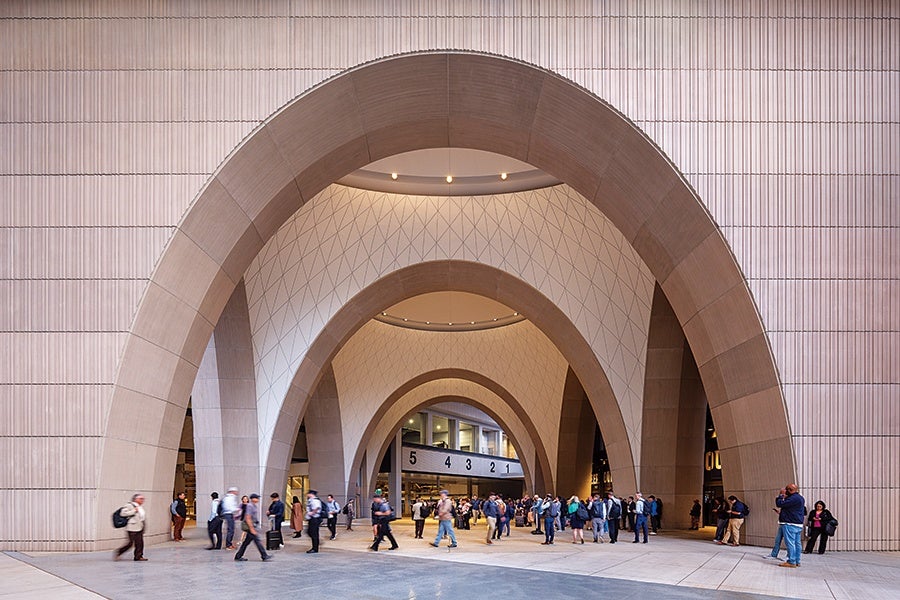
“The expanded concourse is designed to give Boston the arrival experience a city of its stature deserves—welcoming, expansive, and connected to both its past and future,” said Graham Banks, partner at Pelli Clarke & Partners. / Photo by Jason O’Rear
When South Station opened on January 1, 1899, it was hailed as the largest train station in the world. Built by the Boston Terminal Company—a collaboration among five railroads—it represented the optimism of a city on the rise. Designed by Shepley, Rutan & Coolidge, protégés of H.H. Richardson, the station embraced the neoclassical revival style favored by the City Beautiful movement, which aimed to bring grandeur to urban architecture. Flanked by two wings and a massive metal shed, its pink-granite and tan-brick façade was anchored by Ionic columns and crowned with a clock modeled after Big Ben. Inside, a coffered waiting room dazzled with marble mosaics and 1,200 electric lights, while amenities rolled out over the years, ranging from a nursery and barbershop to a 600-seat movie theater, which in the 1950s would become a chapel offering speedy sermons on Sundays.
At its peak, South Station served more passengers than New York’s Grand Central. But by the mid-20th century, cars and airplanes lured travelers elsewhere, and the station fell into decline. The 1930 demolition of its train shed, followed by the removal of the long brick wings, shrank its footprint dramatically. By the 1960s, demolition loomed. Preservationists fought back, and in 1975, the headhouse earned a spot on the National Register of Historic Places. Later, MBTA-led renovations restored tracks and upgraded transit connections, ensuring South Station’s survival.
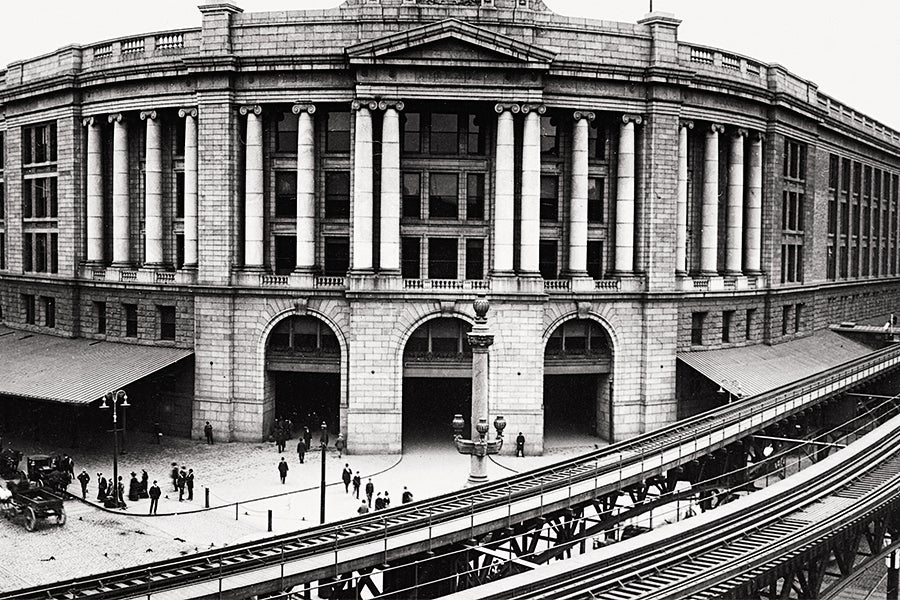
The Beaux-Arts South Station, circa 1902. The brick edifice, designed by architects Shepley, Rutan & Coolidge, has long been an icon of civic architecture in the city. / Photo courtesy of Historic New England, archival by Nathaniel L. Stebbins
Now, 126 years after its debut, the city’s busiest transit hub has entered a new chapter. September marked the unveiling of the most significant overhaul since the 1980s, a public-private partnership developed by Hines and designed by Pelli Clarke & Partners. The multidecade project reimagines the station as both a modern transportation hub and a civic centerpiece.
At the heart of the transformation is the “Great Space,” a soaring new south concourse supported by ten concrete arches and three domes rising six stories high. Light-filled and expansive, it relieves congestion, improves circulation, and creates a dramatic gateway for the 128,000 passengers who pass through daily. For the first time, South Station’s bus and rail terminals are seamlessly integrated, with 50 percent more capacity for buses and easier transfers between Amtrak, MBTA commuter rail, subway, and intercity buses.
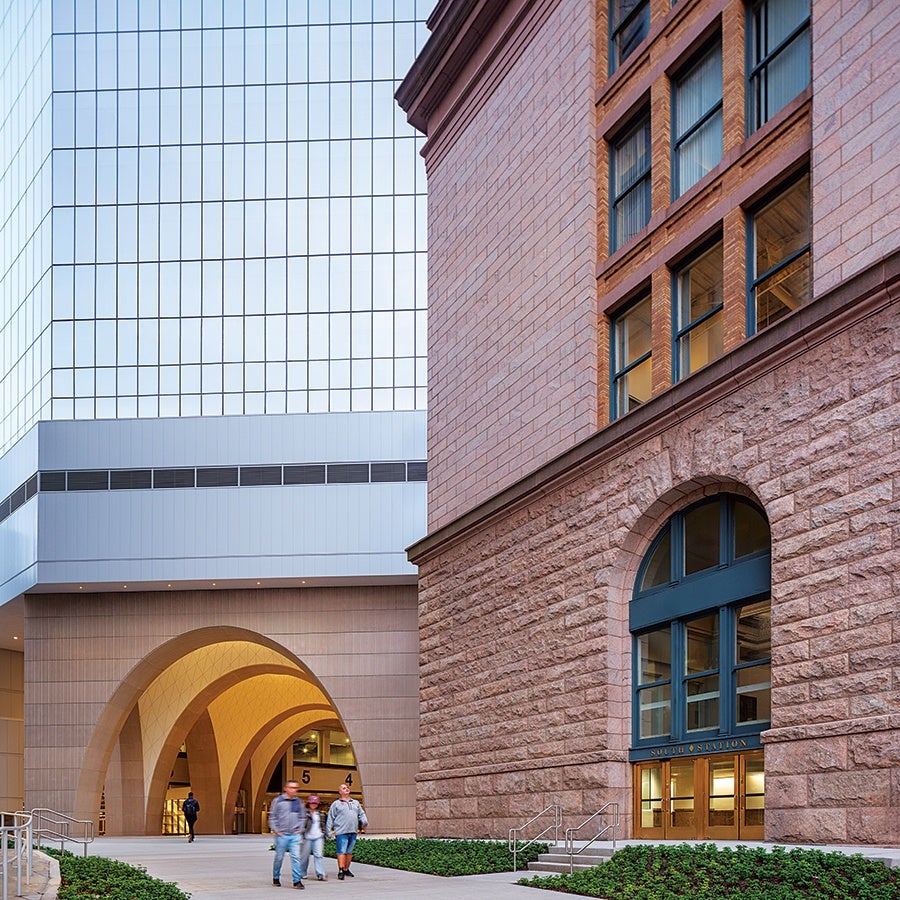
A new south entrance concourse, known as the Great Space, features ten soaring concrete arches supporting three dramatic domes that rise six stories high, forming both a monumental gateway and the structural base for the new tower above. / Photo by Jason O’Rear
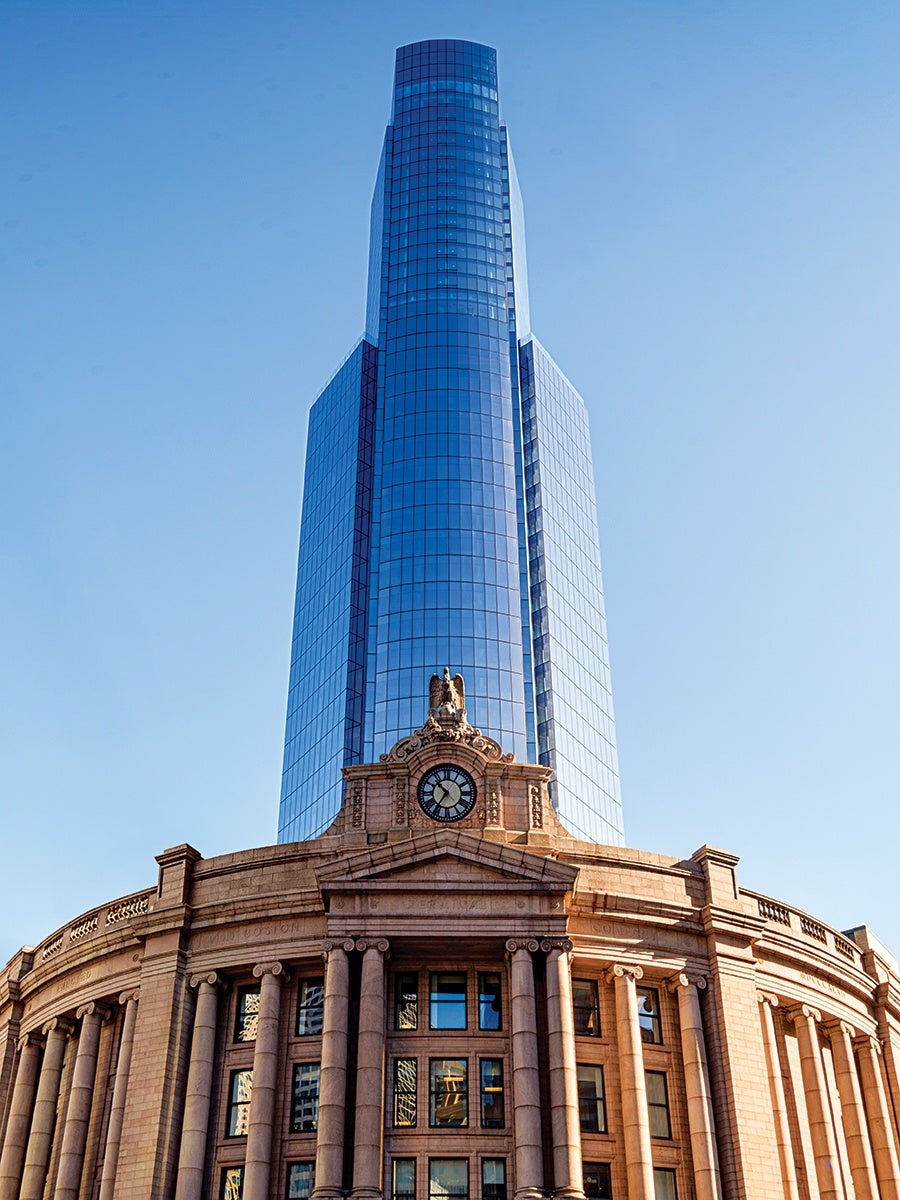
Rising above the historic station and concourse, the bold, contemporary 51-story tower was sculpted to complement the massing and scale of the historic headhouse. / Photo by Jason O’Rear
Above this civic gateway rises an unmistakable new landmark: a 51-story tower of glass and steel that reshapes the Boston skyline. Designed to complement the station’s architecture rather than overshadow it, the tower contains office space, Ritz-Carlton residences, dining, retail, and a one-acre rooftop park. Sustainability is central, with LEED Gold pre-certification and a goal of becoming the first U.S. project to achieve a BREEAM “Excellent” rating.
Through it all, the historic headhouse remains the anchor—a reminder of Boston’s past even as the station steps into the future. From the splendor of its original concourse to its new role as a multi-modal hub, South Station embodies the city’s capacity to adapt, evolve, and endure.
First published in the print edition of Boston Home’s Winter 2026 issue, with the headline “Full Steam Ahead.”
Related
- South Station Tower to Get Three New Restaurants
- Inside South Station Tower, Boston’s Big Bet on Downtown Living
- Boston’s Fanciest New Address? The Ritz-Carlton Residences at South Station Tower