The Ultimate Guide to Omakase in Boston
207 courses. 50-plus fish. A dozen counters. Our deep dive = your cheat sheet.
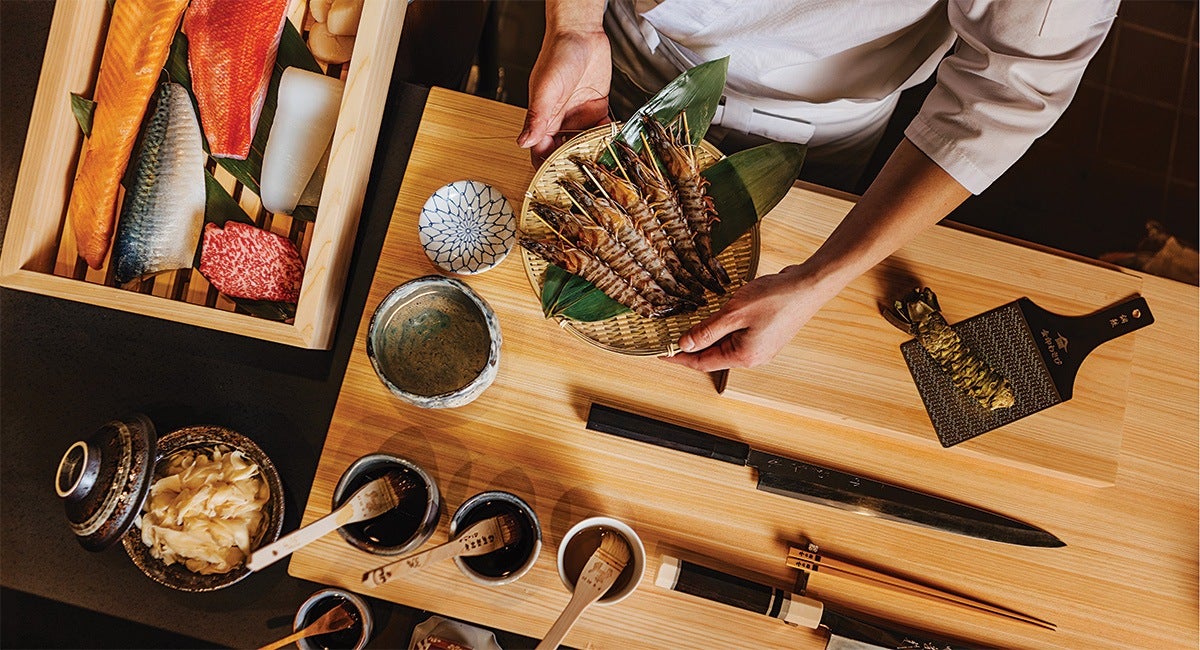
Wa Shin. / Photo by Adam Detour
Over 200 courses, 50-plus species of fish, 25 cumulative hours of dining, and one serving of Japanese whisky down a bone-marrow luge: We took a deep dive into Greater Boston’s omakase scene to bring you this cheat sheet to a dozen top spots. These high-end sushi tasting menu experiences are in the local spotlight right now, thanks in part to the late 2025 announcement of a Michelin star for 311 Omakase (Boston’s only star) and Michelin recommendation for Wa Shin. Still, Boston’s no stranger to omakase: Some of the veterans of the scene date back to the early aughts.
For seafood lovers, it’s a worthy, and delicious, endeavor to visit these restaurants, simultaneously enjoying top-tier Japanese imports and local, sustainable picks. But the costs for these luxurious sushi feasts—consisting of around one to two dozen tiny, pristine bites, coursed over two to three hours—feel stratospheric. Depending on the restaurant, you might be looking at over $300 per person, and that’s before drinks and a variety of fees. At special-occasion pricing, you’re going to want to make sure the one you choose is worth the big bucks. Read on for the rundown on 12 choices that run the gamut from simply garnished, traditional fare to dramatic presentations, from solemn vibes to chatty chefs. There’s something for every taste here.
Note: Pricing and reservation information is accurate as of March 2026 but may change over time.
311 Omakase. / Photo by FWA Creative
311 Omakase (South End)
The Chef: Founder and executive chef Wei Fa Chen trained under Masayoshi Takayama at Masa in New York—the temple of omakase that held three Michelin stars for more than a decade (now two).
Come Here When: You want to understand what the fuss is about and experience Boston’s first (and, so far, only) Michelin-starred restaurant.
The Vibe: Descending into this basement-level dining room in a South End brownstone, you’ll feel the instinct to speak in hushed tones. But manager Carrie Ko’s warm hospitality quickly puts you at ease. Luxurious touches—hot towels; an under-chair box for your purse; small-batch, artisan plates from Japan—add to the experience.
311 Omakase. / Photo by FWA Creative
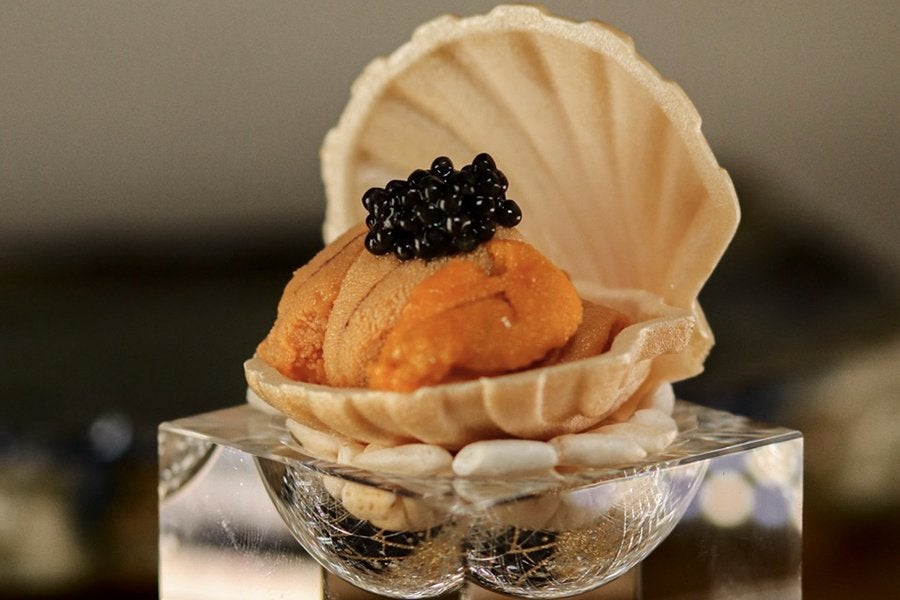
The Fish: Winter sourcing leans almost entirely Japanese—watch for the signature kegani, or horsehair crab, sweet and briny and gone in two bites. Warmer months bring local seafood into the mix.
The Damage: $280 per person for 18 courses, plus a 7 percent kitchen fee, beverages (sake and wine are available), optional supplements, tax, and gratuity.
The Reservation: Seventy-five days of reservations drop at noon on the 15th of each month. (Join the waitlist if nothing’s available.) There’s a $150 per person fee for no-shows or cancellations within 48 hours of the reservation.
605 Tremont St., South End, Boston, 311boston.com.
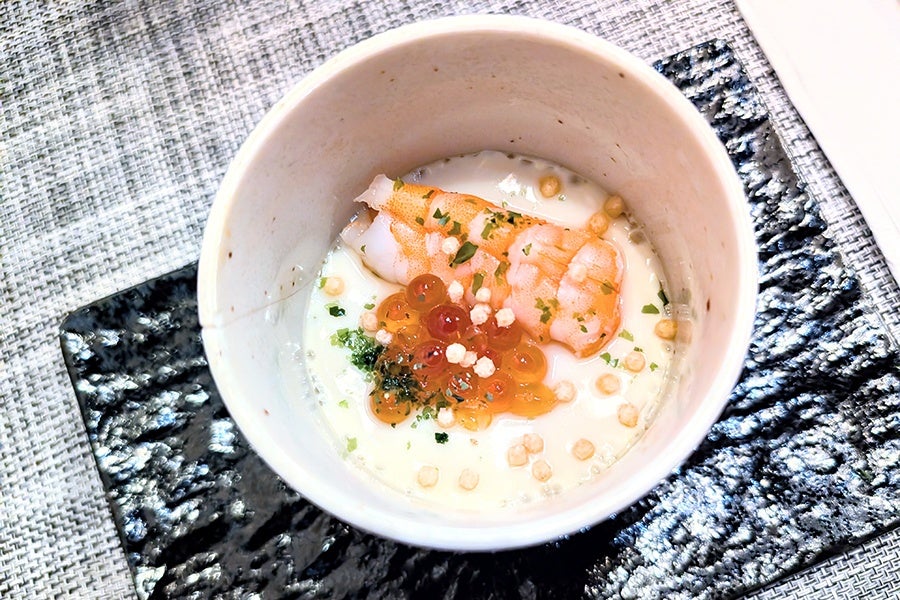
Chawanmushi at Akami Omakase: shrimp, marinated ikura, rice puffs, smoke. / Photo by Rachel Leah Blumenthal
Akami Omakase (Brookline)
The Chef: Kiattisak Chooprasit, a.k.a. Chef Jam, who cut his teeth running a private-chef omakase business, keeps things personable at the counter, explaining why each fish tastes the way it does.
Come Here When: You’re seeking omakase that’s fast (meals clock in at about an hour), doesn’t break the bank, and still delivers the goods.
The Vibe: Laid-back instrumental jazz on the speakers, but the energy is casual, chatty, and fun—no need to dress up unless you’re feeling it.
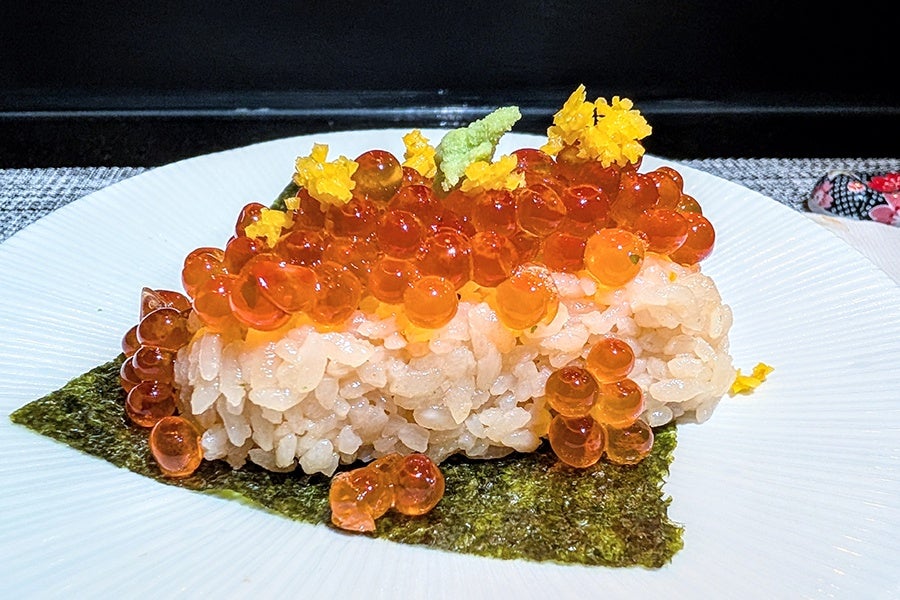
A supplemental handroll at Akami Omakase: ikura, kizumi, yuzu, and nori powder. / Photo by Rachel Leah Blumenthal
The Fish: You won’t find the luxe sourcing and rare-find flex of pricier spots, but that’s the trade-off for the price tag, not a knock on the food. Highlights of a recent meal included otoro with a dollop of Maine uni, flavors that just melded; a super-savory Chinese sardine hand roll; and chawanmushi—served with a theatrical puff of smoke—with shrimp, ikura, and crunchy rice puffs.
The Damage: This is the most wallet-friendly omakase option around, and they know it—$99 per person for 14 courses. (Add a supplemental handroll or two, $15-$30, if you’re hungry for more.) The sakes, too, are relatively light on the bill.
The Reservation: Snagging a seat is easy: Akami is open six nights a week, with three seatings a night at its 10-seat counter. Cancel without penalty up to 24 hours before the reservation; within 24 hours, there’s a $50 per person fee.
187 Harvard St., Brookline, 617-383-5524, akamiboston.com.
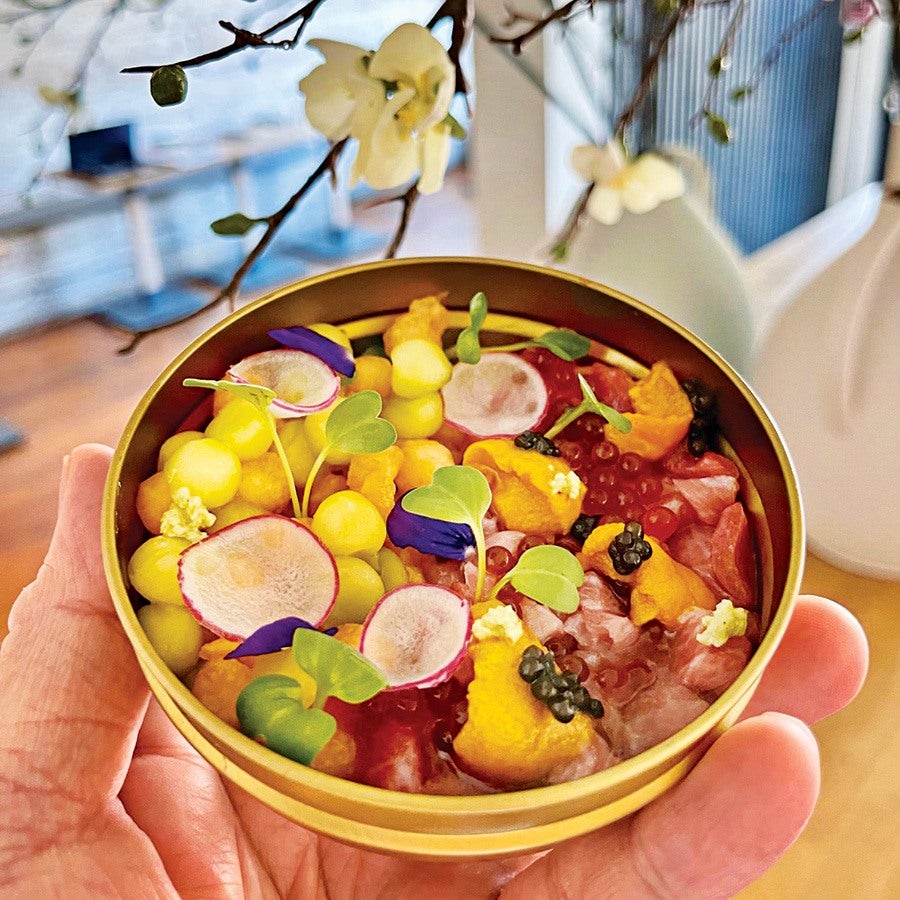
Momi Nonmi. / Courtesy photo
Momi Nonmi (Inman Square)
The Chef: Chef-owner Chris Chung—likely the only face you’ll see during your omakase experience—is an Uni alum who went on to cofound the gone-but-not-forgotten Japanese-French restaurant AKA Bistro in Lincoln.
Come Here When: You want a semi-private crash course in sushi aging techniques, premium Japanese imports, and lesser-known fish.
The Vibe: Haters of high seats at counters, rejoice: This one keeps your feet on the ground at the no-frills tables in the tiny Inman Square dining room. (The restaurant used to be izakaya-inspired before a pandemic pivot to omakase.) Chung prepares each bite tableside, although the knifework is done behind the scenes beforehand.
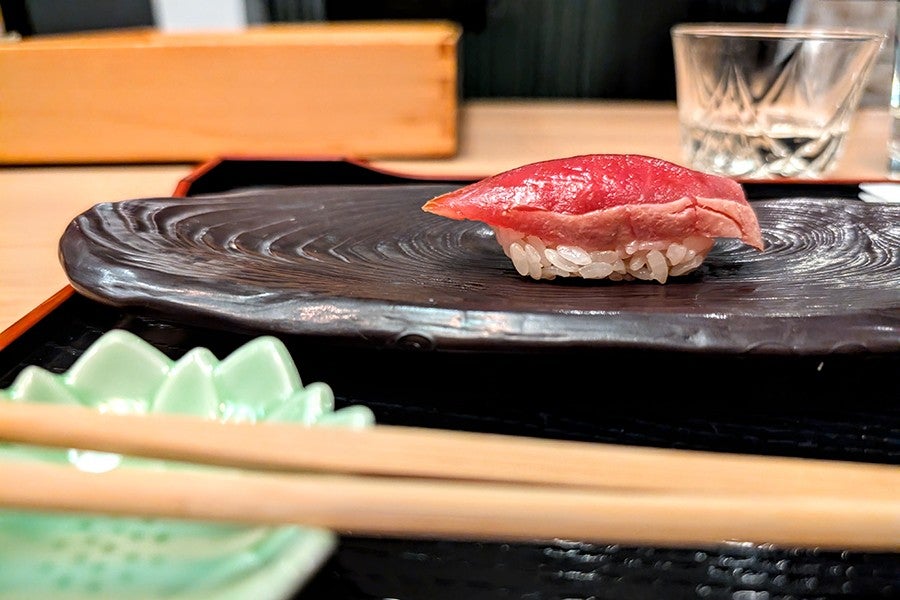
Lightly seared akami (lean cut) of big eye tuna from Kona, Hawaii, at Momi Nonmi. / Photo by Rachel Leah Blumenthal
The Fish: Chung mostly sources from Japan and weaves a narrative through each meal. Case in point: At a late-2025 meal, he followed the mollusk-eating Hokkaido kuromutso—which tastes like pure essence of scallop—with actual scallops, soy-aged with a squeeze of lime. Bonus: Chung geeks out on rice sourcing, too. At that meal, the grain came from a Tokyo shop he said has been open since the 1800s, dressed with vinegar aged five-plus years.
The Damage: Anywhere from $145 per person to $545, depending on how deep you want to go—from a breezy weeknight nigiri-and-donburi option to a 20-plus-course blowout loaded with luxury ingredients, with intermediate options in between. The price includes a 3% kitchen fee and does not include drinks, tax, and gratuity.
The Reservation: Booking is a little unconventional: Fill out a Google Form with the desired date, time, and meal choice, then wait for Chung to confirm.
1128 Cambridge St., Inman Square, Cambridge, mominonmi.com.
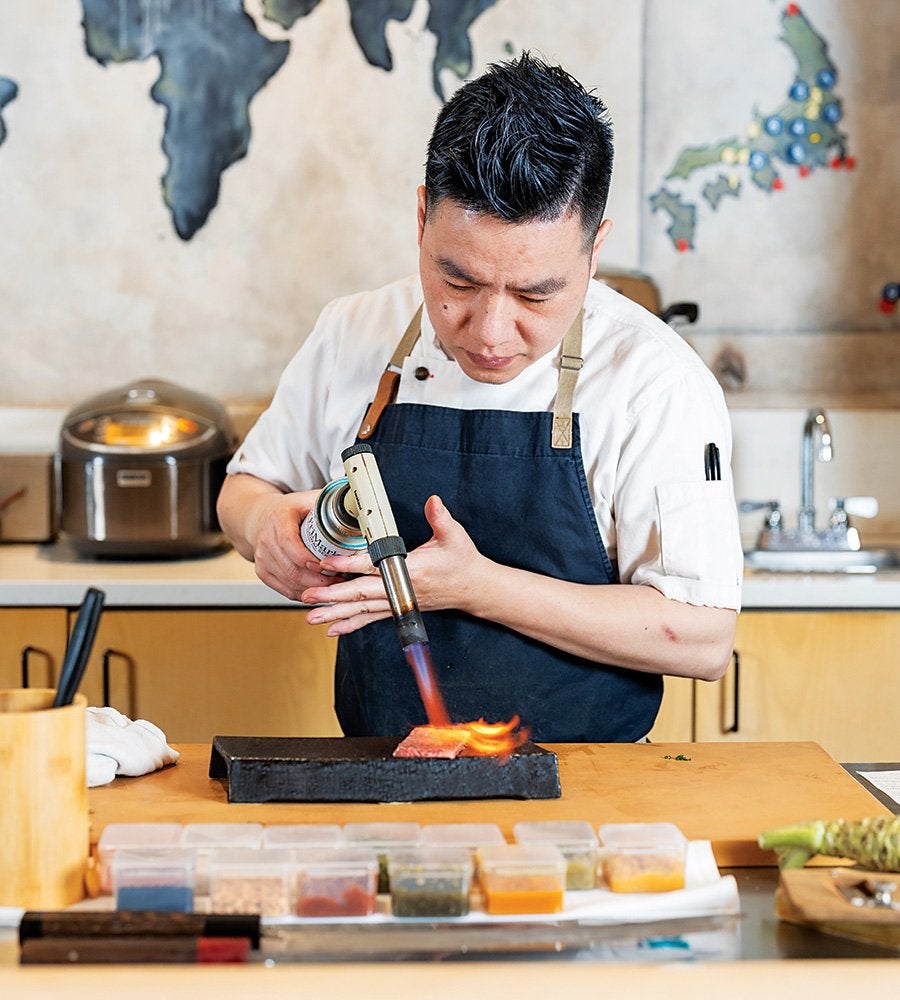
Chef Jin Jiang at No Relation. / Photo by J-M Leach
No Relation (South End)
The Chefs: Traveler Street Hospitality chef and partner Colin Lynch learned the ins and outs of sushi at O Ya and perfected his seafood skills further at his first restaurant, the coastal Italian spot Bar Mezzana, crafting top-tier crudo. Here, he oversees an exceptionally capable team of sushi chefs, led by Jin Jiang, who started his career at a traditional Japanese washoku restaurant in China.
Come Here When: You feel like hiding out: This sushi speakeasy is concealed underground in the back of lively sibling bar Shore Leave. Finding it is half the fun.
The Vibe: Attention to detail abounds, with beautiful cherry blossoms painted across the floor, a magnetic world map behind the sushi counter indicating fish sourcing, and an eclectic soundtrack that bounces from old-school hip-hop to Johnny Cash.
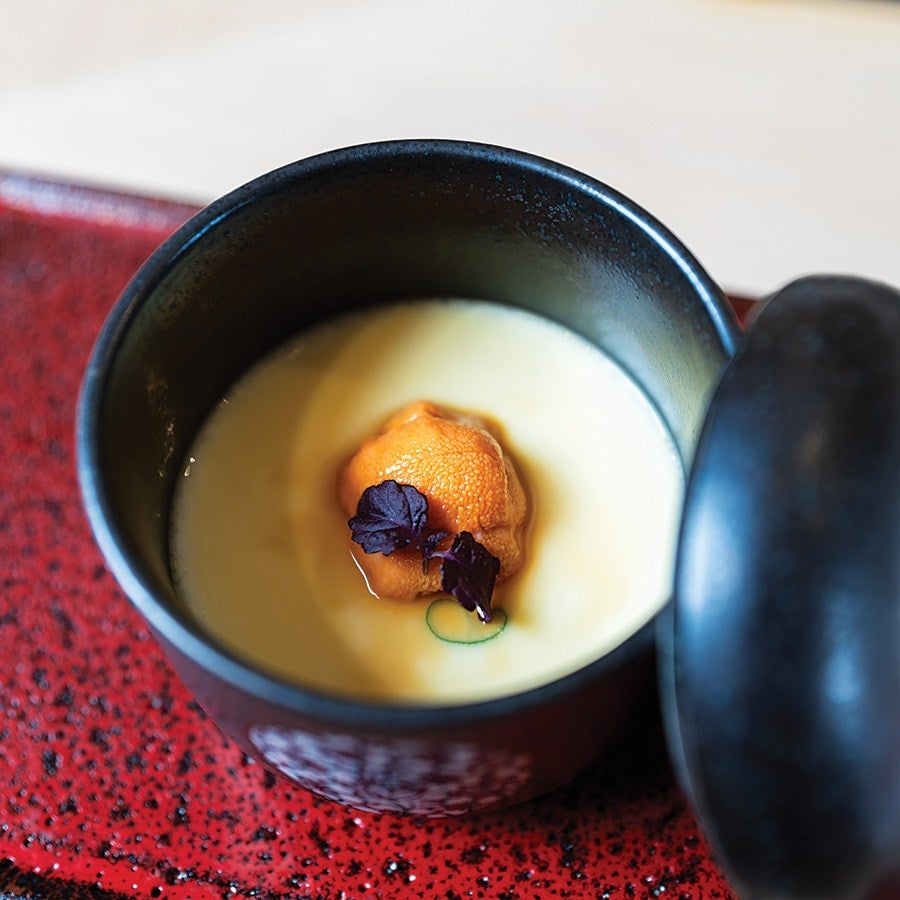
No Relation. / Photo by J-M Leach
The Fish: Faithful Japanese flavor combinations top pristine slices of fish, with the occasional surprise: A bite of the massive Tyee salmon, for example, might be embellished with dill alongside sweet miso; jalapeño might appear atop madai (sea bream) with cooling cucumber.
The Damage: $225 per person, plus tax, for a 17-course meal, plus beverages and optional supplements—no gratuity accepted. (Looking for something a little more casual and affordable? Shore Leave offers its own omakase nightly at $89 per person for approximately 14 courses.)
The Reservation: There are only nine seats, but with two seatings every night, a bit of flexibility should get you in without too much trouble, especially early in the week. There’s a $100 per person charge for cancellations within 48 hours of the reservation or the full $225 per person for no-shows; however, either charge will be transferred to a physical gift card for in-person pickup within two weeks.
11 William E. Mullins Way, South End, Boston, 617-530-1772, norelationboston.com.
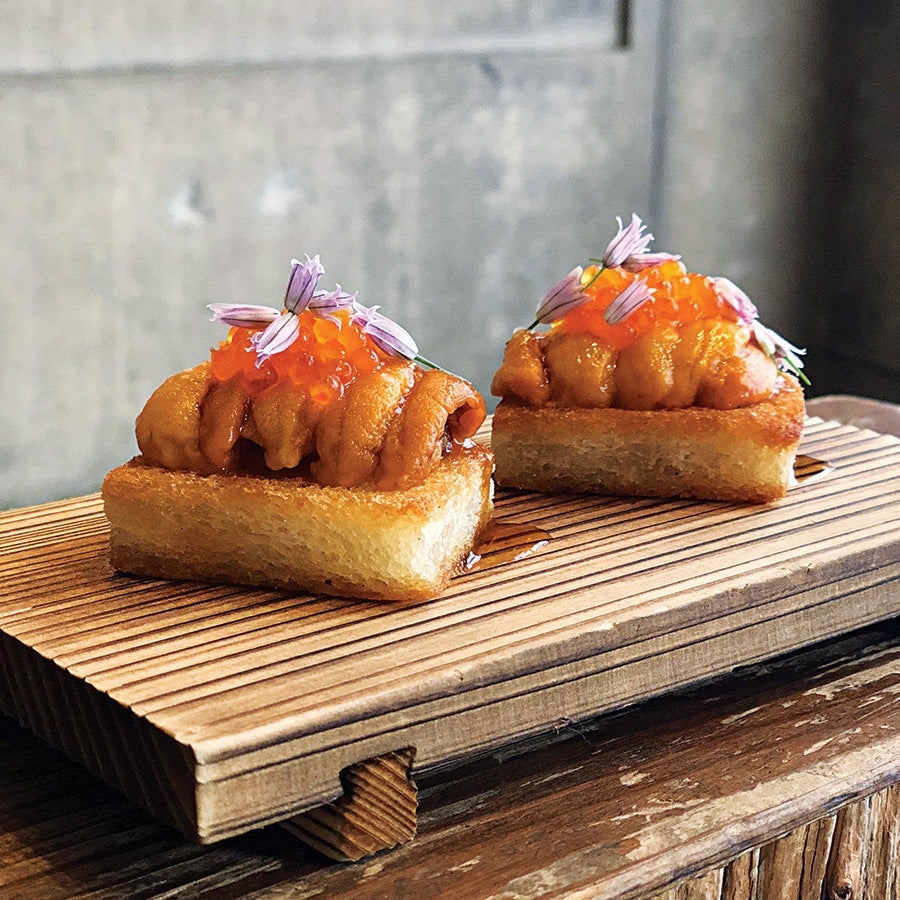
O Ya. / Photo by Brian Samuels
O Ya (Leather District)
The Chef: James Beard Award–winning chef Tim Cushman—who owns O Ya with his wife, Nancy, a sake savant—was an aspiring musician back in the day. Now, he composes 20-course meals that sing, each bite hitting a higher note than the last.
Come Here When: You want to remember why Boston got serious about sushi in the first place. Open since 2007, back when “omakase” still needed an explanation, O Ya hasn’t coasted on that legacy—and some of those early dishes are still on the menu. We love you forever, banana-pepper-mousse-topped hamachi.
The Vibe: Quiet luxury in an old firehouse steps from South Station that somehow feels miles away from the bustle.
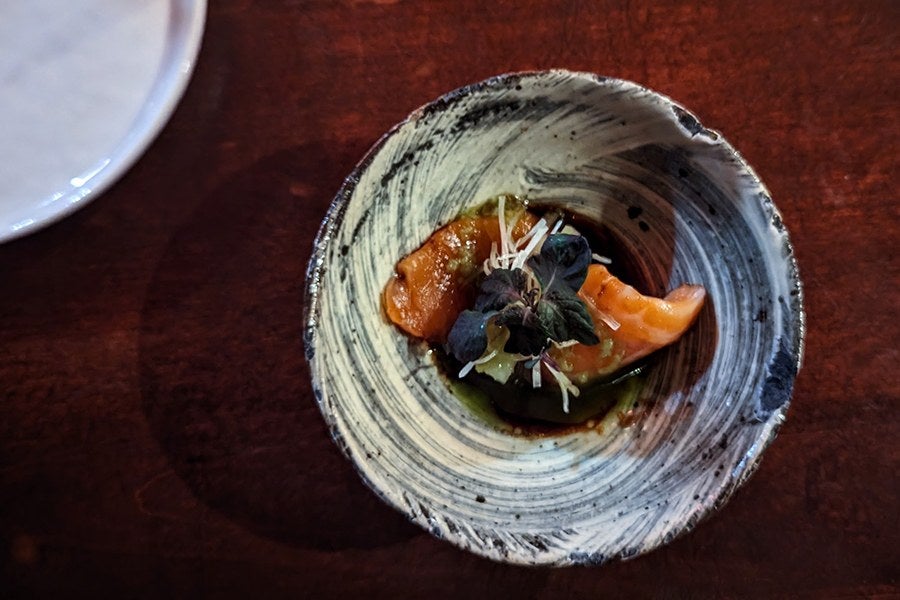
O Ya. / Photo by Rachel Leah Blumenthal
The Fish: Cushman and his team treat their ingredients like recurring characters—you’ll meet them once, then encounter them again, transformed. A Kumamoto oyster might first appear raw, dotted with watermelon pearls, then return a few courses later, fried and topped with a cloud of squid-ink foam. Hokkaido uni gets the caviar treatment sitting atop rice and nori in one course; later, it’s on toast, topped with smoked trout roe and truffle honey. It’s showing off, but damn if it doesn’t work.
The Damage: Around $380 per person for 20 courses, prepaid when you book. That includes a 7 percent tax and 20 percent administrative fee—no awkward tip math at the end. Vegetarian and vegan menus run the same price.
The Reservation: The Tuesday-through-Saturday schedule means weeknight seats open up more often than you’d think—especially if you’re willing to eat early.
9 East St., Downtown Boston (Leather District), 617-654-9900, o-ya.restaurant.
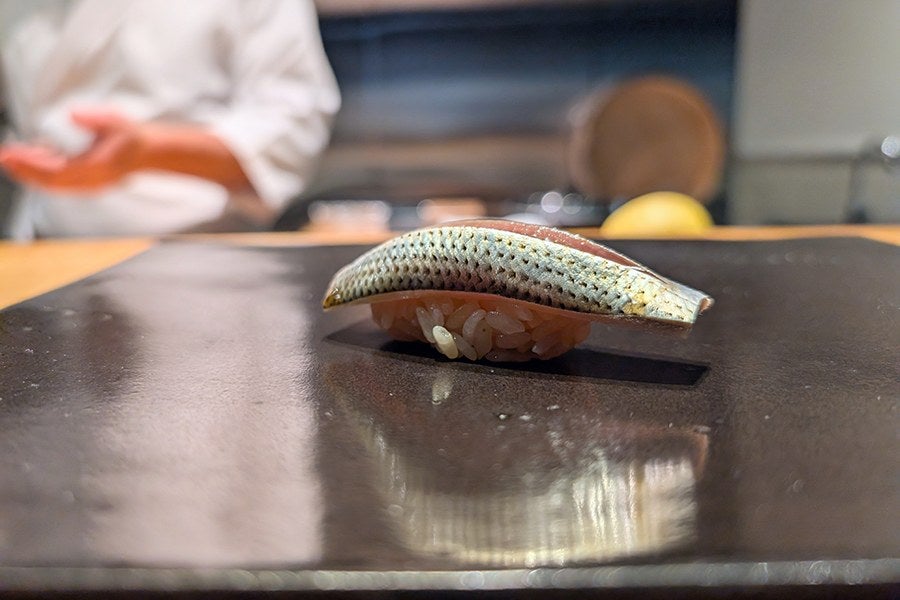
Gizzard shad, a hallmark fish of Edomae-style sushi, at Sushi Sang Lee. / Photo by Rachel Leah Blumenthal
Sushi Sang Lee (Gloucester)
The Chef: Chopped champ Sang Hyun Lee hails from South Korea and has worked at Japanese restaurants around Massachusetts and New York for about 25 years. The TV trophy is nice; the quarter-century of experience is even nicer.
Come Here When: You want the spirit of Edomae sushi (a style with roots in early-19th-century Edo, later Tokyo, that often involves curing or cooking fish before molding it on top of rice) with a refreshingly hyperlocal viewpoint.
The Vibe: We could sit in the adjustable, ultra-comfy stools all day. Bright lighting at the counter, dim everywhere else, makes this feel like theater. (One eye-catching decoration, a Gloucester thresher shark tail, adds to the drama.)
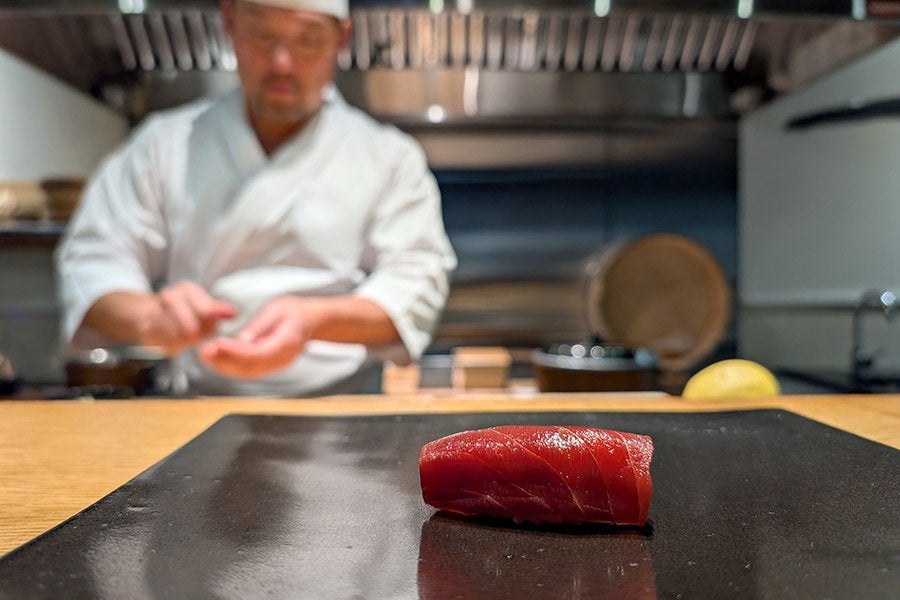
Akami zuke, lean marinated Gloucester bluefin tuna, at Sushi Sang Lee. (Chef Sang Lee is in the background.) / Photo by Rachel Leah Blumenthal
The Fish: Much is caught in Gloucester’s own waters, so Lee calls his style “Gloucester/Edomae.” Fish might be marinated (such as a lean cut of local bluefin), cured (such as mackerel, rolled up in nori with shiso, chives, and ginger), simmered (such as conger eel in a five-year-old mother sauce), or otherwise preserved—Edomae sushi was born before modern refrigeration, after all. Nineteenth-century methods meet this morning’s catch.
The Damage: This BYOB North Shore spot will set you back $190 per person for 18 courses before gratuity, tax, and fees.
The Reservation: With just eight weekly seatings and eight seats at each, you’ll want to plan ahead: Reserve up to 30 days in advance. (Full payment is taken when booking; contact more than 48 hours before the reservation if you need to cancel. Reservations can be transferred.)
76 Prospect St., Gloucester, 978-381-3818, sushisanglee.com.
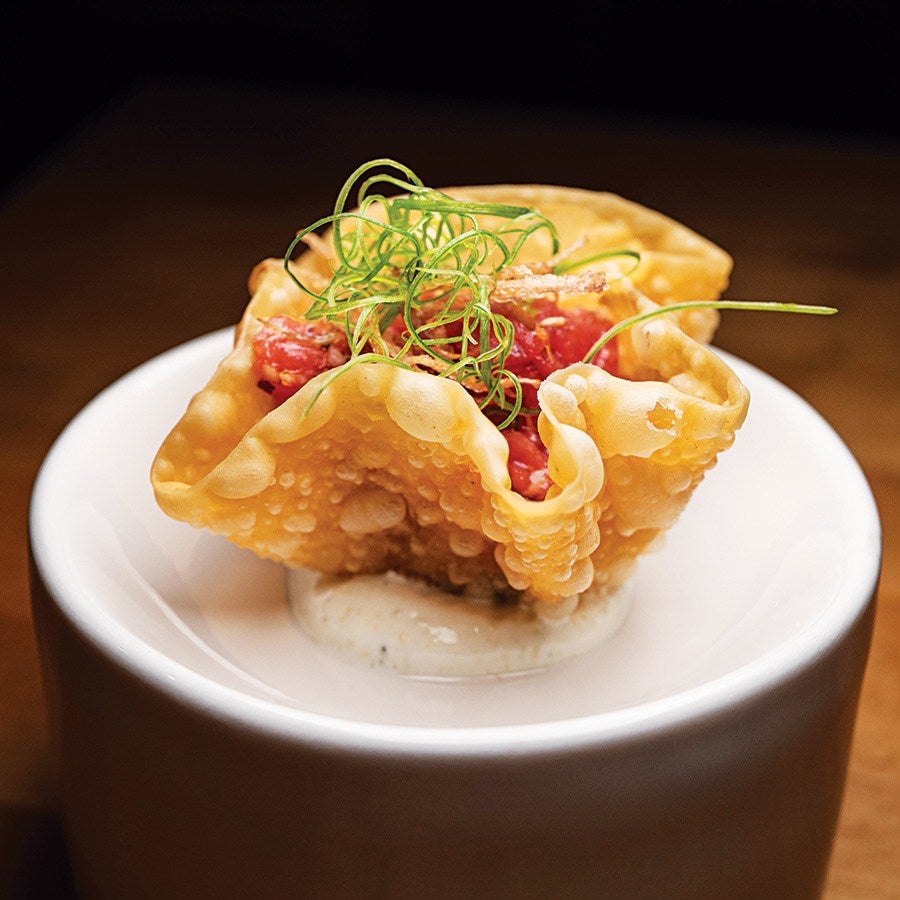
Umami Omakase. / Courtesy photo
Umami Omakase (North Cambridge)
The Chef: Uni alum Gary Lei isn’t afraid to think outside the sushi box, delighting with elaborate garnishes and theatrical presentations. He and his team recently opened a casual, à la carte offshoot to Umami Omakase, Umami Crudo, in Boston’s North End.
Come Here When: You’re looking for dinner and a show—bites of caviar-topped nigiri might be followed by, say, duck breast that arrives dramatically under a smoke-filled cloche. If subtlety is your thing, move along.
The Vibe: Minimal décor lets the dishes and chatty service shine; bright lighting lets you capture it all for the ’Gram.
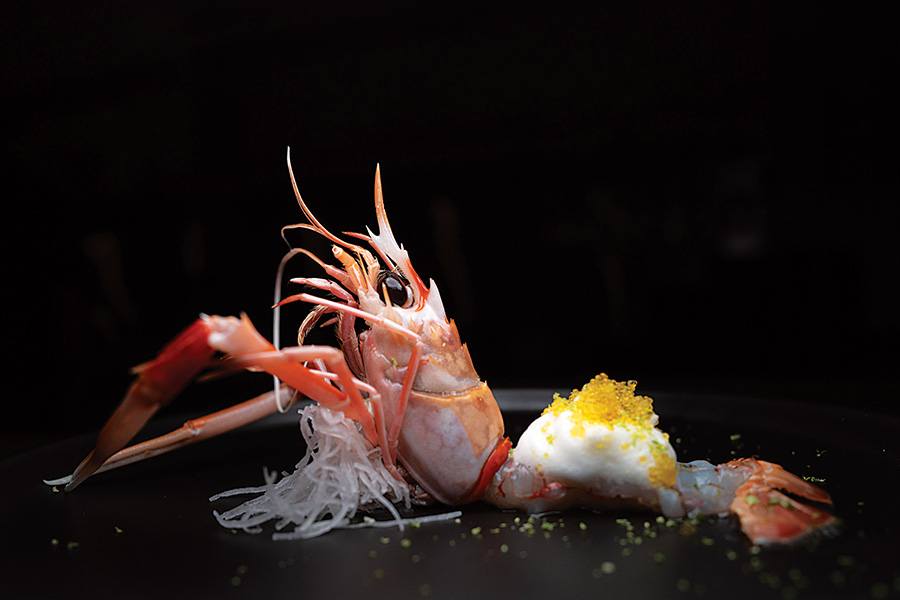
Umami Omakase. / Courtesy photo
The Fish: Think of your meal as Japanese Fish 101: Throughout the nigiri courses, you’ll get to know the fish intimately, as staffers present whole specimens on platters. And don’t sleep on the house-made ginger—unusually strong honey notes make it a standout among the restaurants in this guide.
The Damage: Pricing starts at $138 per person (15 courses) or $168 per person (18 courses) but goes higher on some nights of the week; this doesn’t include optional sake pairings, a 6 percent kitchen fee, tax, gratuity, and optional supplements.
The Reservation: Open Tuesday through Sunday, Umami is fairly easy to book, although be aware of the $100 per person charge for no-shows or cancellations within 72 hours of the reservation. Though the omakase-only restaurant does offer standard tables, book the sushi counter for the best view.
2372 Massachusetts Ave., North Cambridge, 617-868-2121, umamiomakase.com.
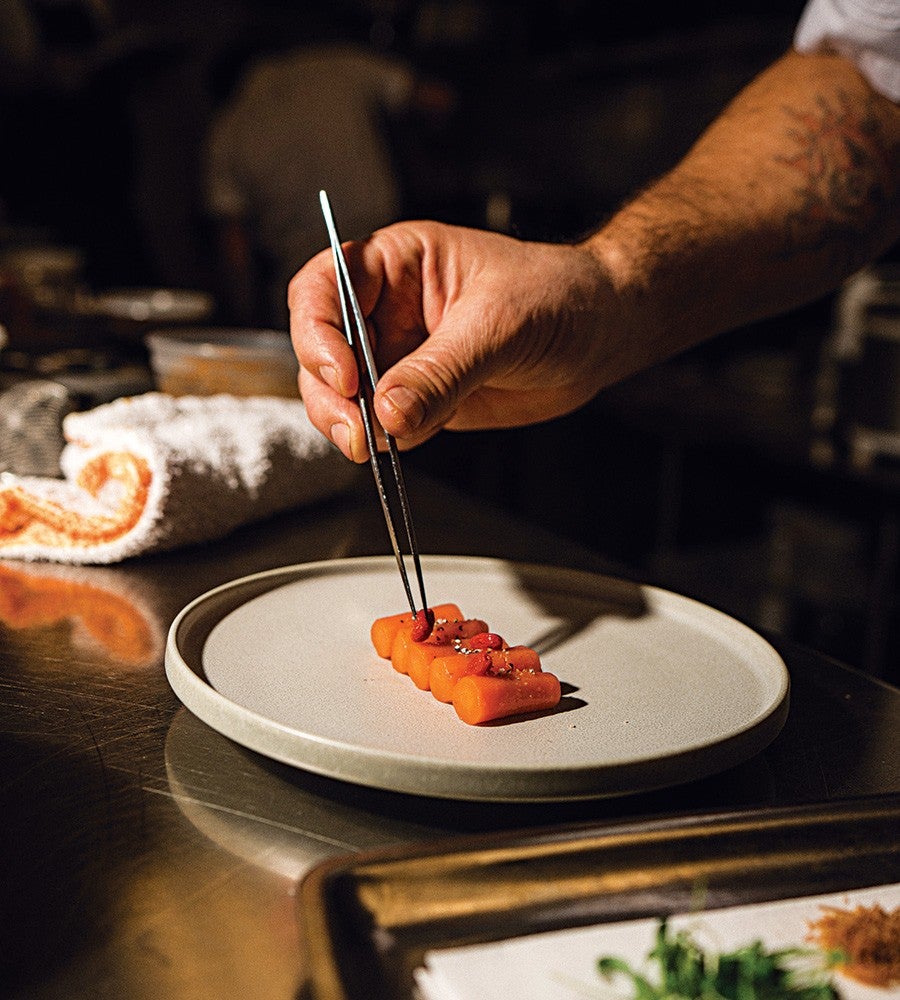
Uni. / Photo by Chris McIntosh
Uni (Back Bay)
The Chefs: Under the watchful eye of Ken Oringer—the chef-restaurateur behind Toro, Coppa, and other date-night all-stars—executive chef David Bazirgan whips up creative fusion dishes in the kitchen, while sushi chef Tsuyoshi Takeishi holds court at the counter. It’s a tag team that works wonders.
Come Here When: You’re in the mood for a nontraditional tasting menu that juxtaposes intriguingly garnished nigiri with cooked Japanese-ish dishes—heavy emphasis on the ish.
The Vibe: Lively and just casual enough at the two sushi counters—one in the spacious main dining room and one in a more-intimate lower-level space. Jeans are fine. A blazer won’t feel like you’re trying too hard.
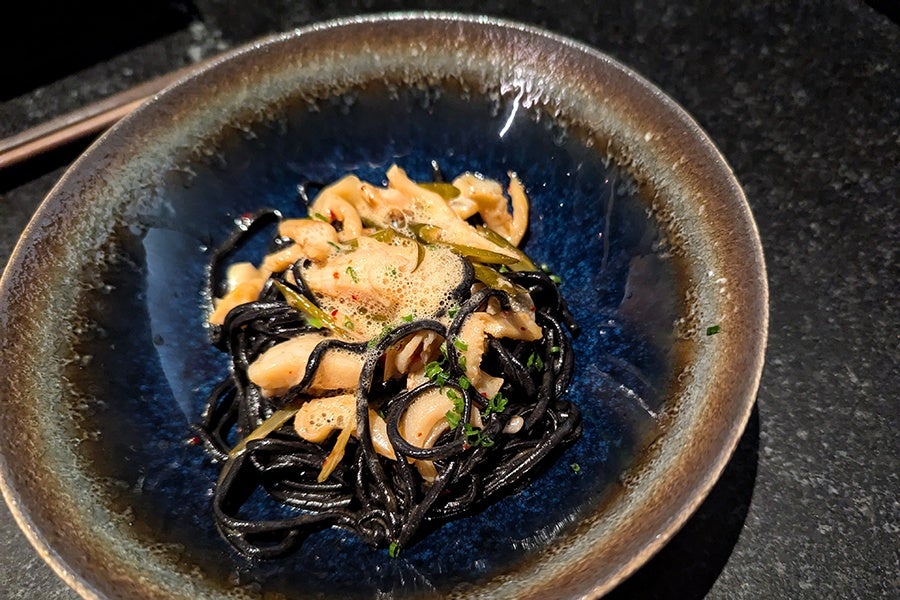
Squid ink lo mein with surf clam, chorizo, and garlic scape, from a June 2025 tasting menu at Uni. / Photo by Rachel Leah Blumenthal
The Fish: Tradition is a jumping-off point, not a rulebook. Mackerel gets olive, walnut, and smoked olive oil; hamachi nigiri arrives with the bracing flavors of horseradish and black vinegar. Purists might twitch. Everyone else will be too happy to care.
The Damage: Recent pricing has ranged from $195 to $225 per person for about 10 courses, with an optional beverage pairing ($85-$95), plus optional supplements, taxes, a 3 percent kitchen fee, and gratuity.
The Reservation: Be sure to choose the daily tasting menu “experience” and sushi counter seating on Opentable when booking. There’s a $25 per person charge for no-shows or cancellations within 24 hours of the reservation.
370A Commonwealth Ave., Back Bay, Boston, 617-536-7200, uni-boston.com.
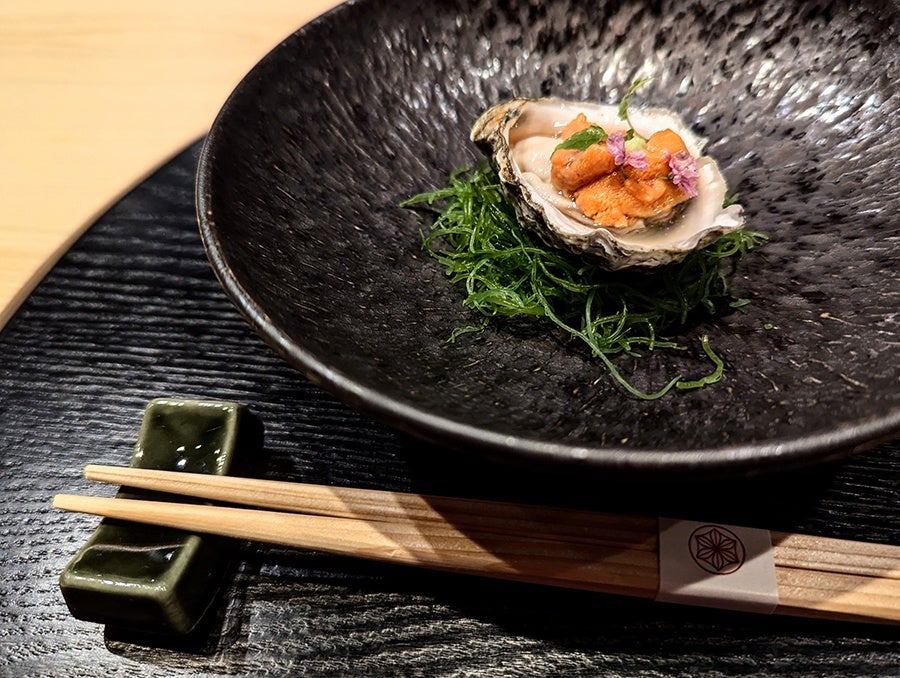
Wa Shin. / Photo by Rachel Leah Blumenthal
Wa Shin (Bay Village)
The Chef: Chef-owner Sky Zheng’s sushi pedigree comes down the Jiro Ono line (of Jiro Dreams of Sushi fame): He trained under Ono protégé Daisuke Nakazawa at the latter’s Michelin-starred New York City restaurant, Sushi Nakazawa. So when Wa Shin nabbed a Michelin recommendation in Boston’s first guide, no one was surprised.
Come Here When: You want serious sushi in a surprisingly unstuffy space.
The Vibe: A light wooden hinoki (Japanese cypress) counter, carefully placed bonsai trees, and pottery. It’s elegant but not intimidating—go a little dressy, but no need to overthink it.
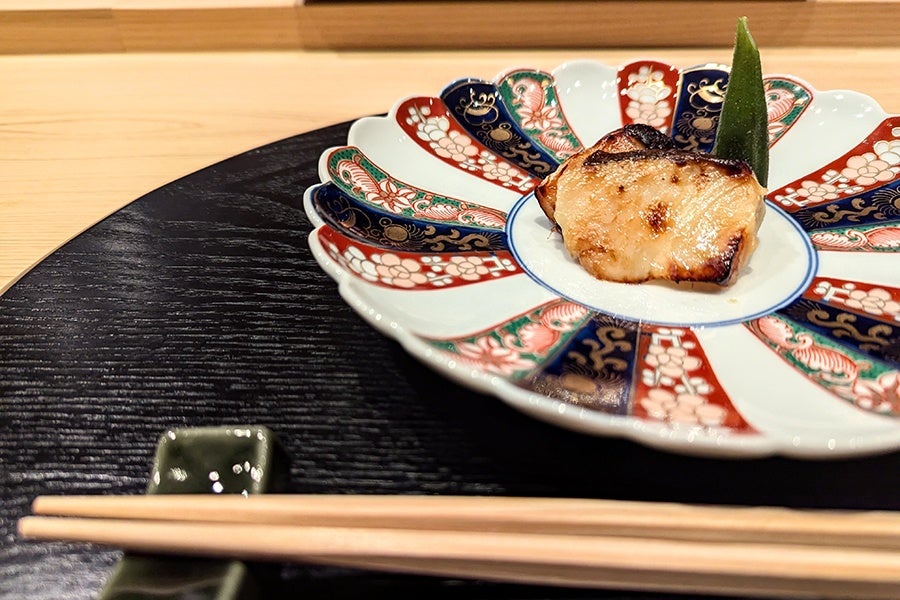
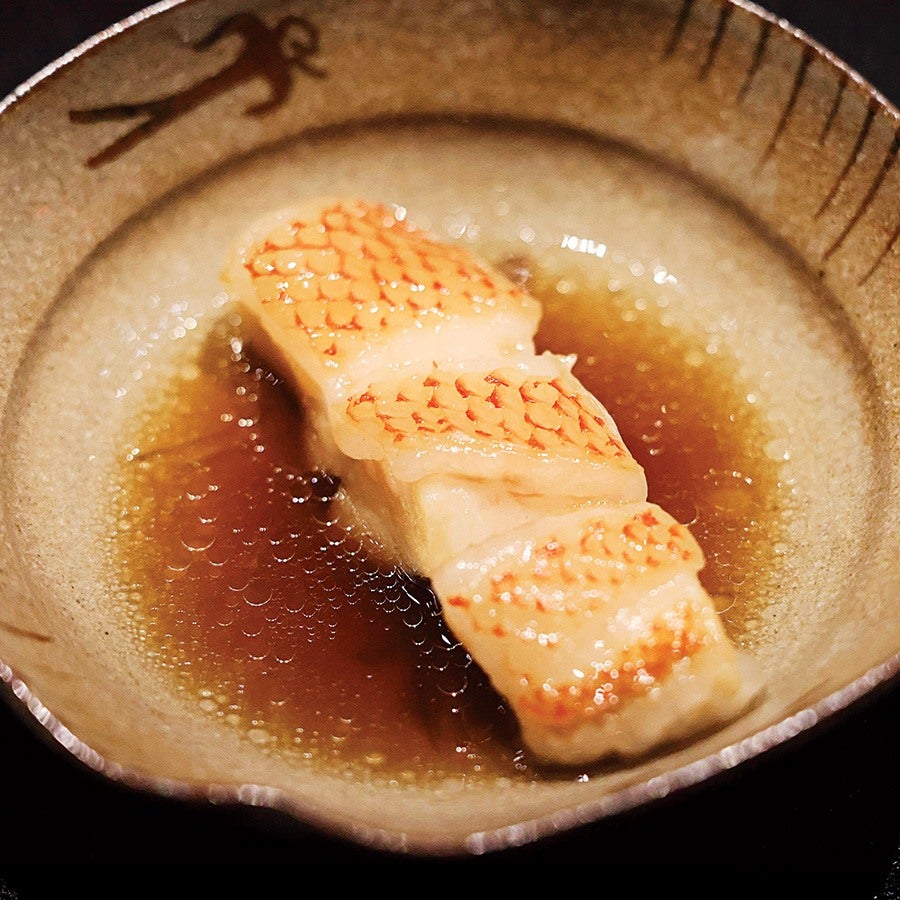
Miso black cod at Wa Shin. / Photo by Rachel Leah Blumenthal
The Fish: Seasonal beauties sourced from Japan and beyond, garnished with careful restraint and occasional exuberance—sometimes in the same bite. Seared otoro topped with a big mound of grated Italian summer truffles, for instance.
The Damage: $199 per person for 18 courses, plus a 20 percent administrative fee that supports both the kitchen and service teams (gratuity is not expected).
The Reservation: Reservations open 14 days in advance. With three seatings a night, six nights a week, this isn’t the toughest reservation in town, especially if you can do a Monday or Tuesday. The cancellation fee is $199 per person, applied within 48 hours of the reservation for parties of one to three or within 72 hours for parties of four and up.
222 Stuart St., Bay Village, Boston, 857-289-9290, washinboston.com.
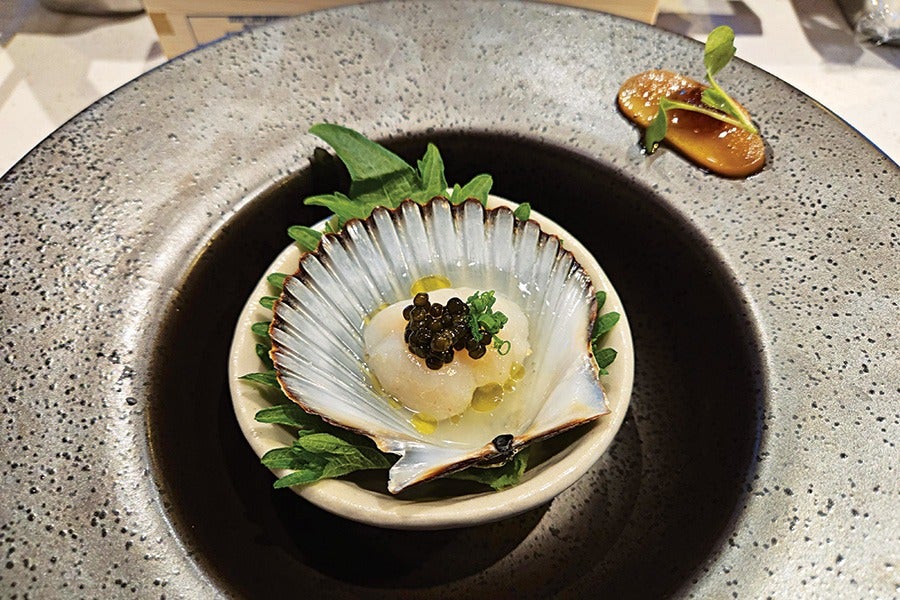
Washoku Renaissance. / Photo by Youji Iwakura
Washoku Renaissance (Charlestown)
The Chef: Chef-owner Youji Iwakura specializes in kaiseki—high-end, multicourse Japanese dining that highlights seasonality and artistry. Before opening Washoku, he owned the now-closed Kamakura downtown.
Come Here When: You want to try something new, such as bonito in nigiri form (rather than the more familiar “dancing” flakes), or escargot-style slipper limpets (sea snails). Adventurous eaters, this one’s for you.
The Vibe: Yes, it’s in a Charlestown food hall. Yes, incongruous soundtracks occasionally drift in and punctuate Washoku’s quiet jazz and Iwakura’s culinary storytelling. Somehow, it only adds to the cozy intimacy of this little nook.
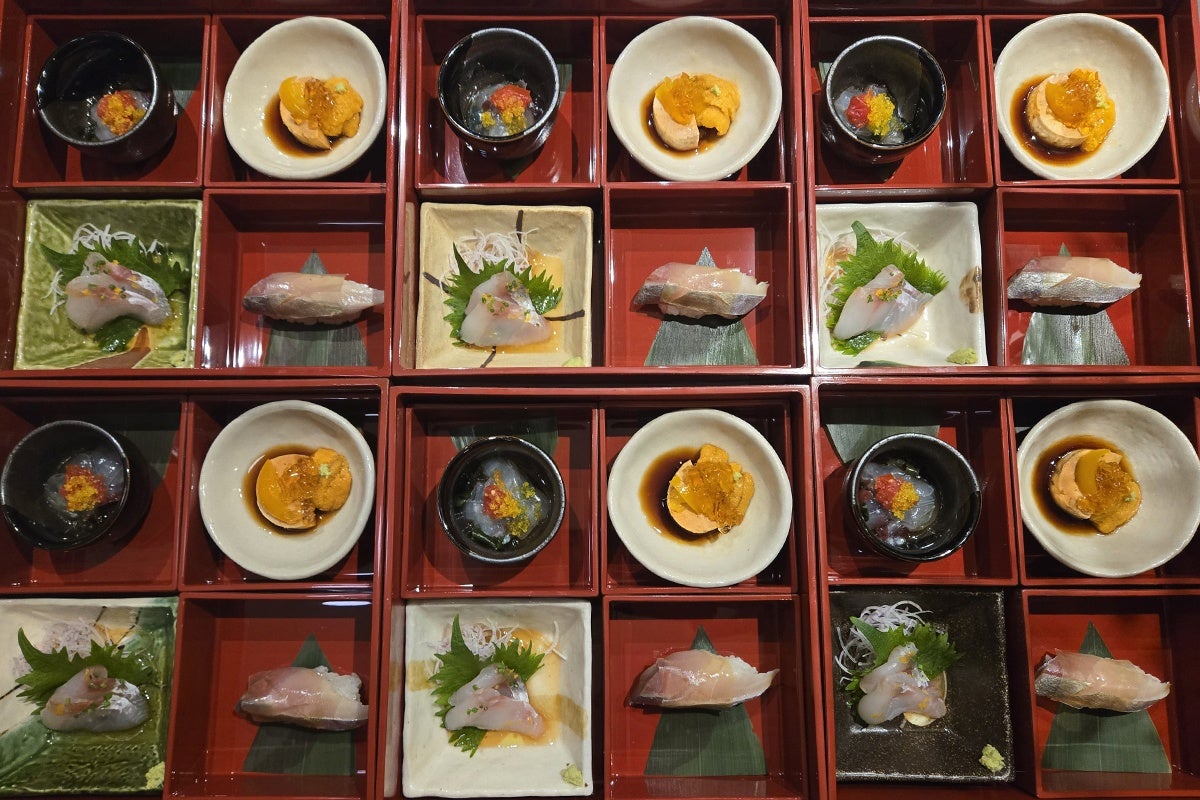
Washoku Renaissance. / Courtesy
The Fish: Sustainability and local ecosystems are top of mind for Iwakura: You’ll see plenty of specialty Japanese imports, sure, but also Boston bluefin (the buttery kamashita-otoro cut—collar rather than belly—if you’re lucky) and boatloads of Rhode Island picks, from tautog to scup.
The Damage: Spring for the 20-course sushi kaiseki dinner ($260 per person), which combines omakase and kaiseki traditions into one giant feast, or explore other options, such as a “casual” 13-course omakase for $120 per person. A 10% culinary team service charge is included; beverages and tax are not.
The Reservation: Reservations are easier to book than they should be—Washoku Renaissance flies undeservedly under the radar, owing in part to its quirky food-hall location. Take advantage. Payment is taken upon booking.
32 Cambridge St., Charlestown, Boston, washokurenaissance.com.
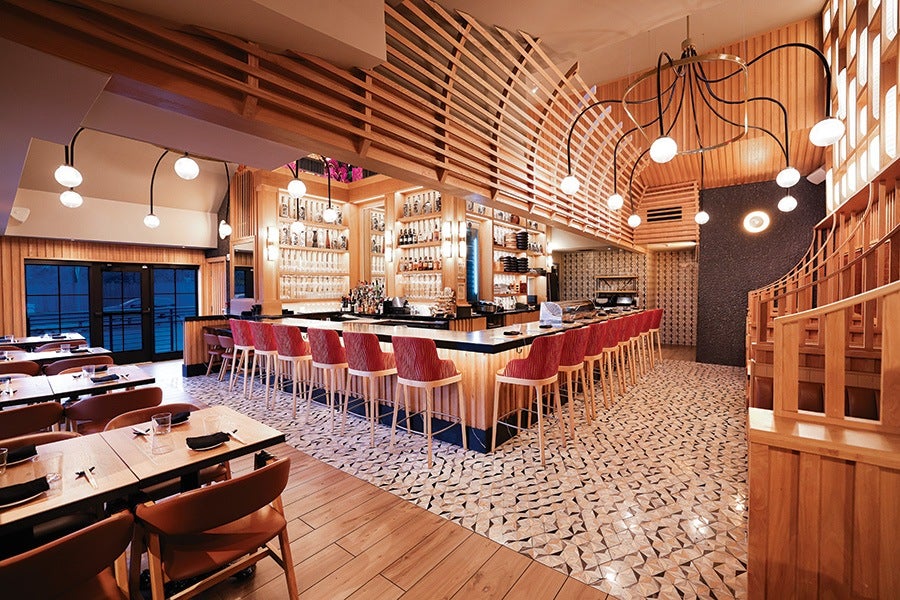
XOXO Sushi Bar. / Photo by Joe St. Pierre
XOXO Sushi Bar (Chestnut Hill)
The Chef: Kegan Stritchko knows his fish, having worked under Philadelphia’s Hiroyuki “Zama” Tanaka, the late sushi master behind the acclaimed Zama. Locally, Stritchko honed his sushi skills at Uni and Fat Baby. The résumé checks out.
Come Here When: You’re in the mood for a party—you might even find yourself shooting whiskey down a bone-marrow luge.
The Vibe: While the rest of the room enjoys regular dinner service, you’ll feel like a rock star hanging out with the executive chef at the counter of this gorgeously appointed suburban space. This is new-school Chestnut Hill.
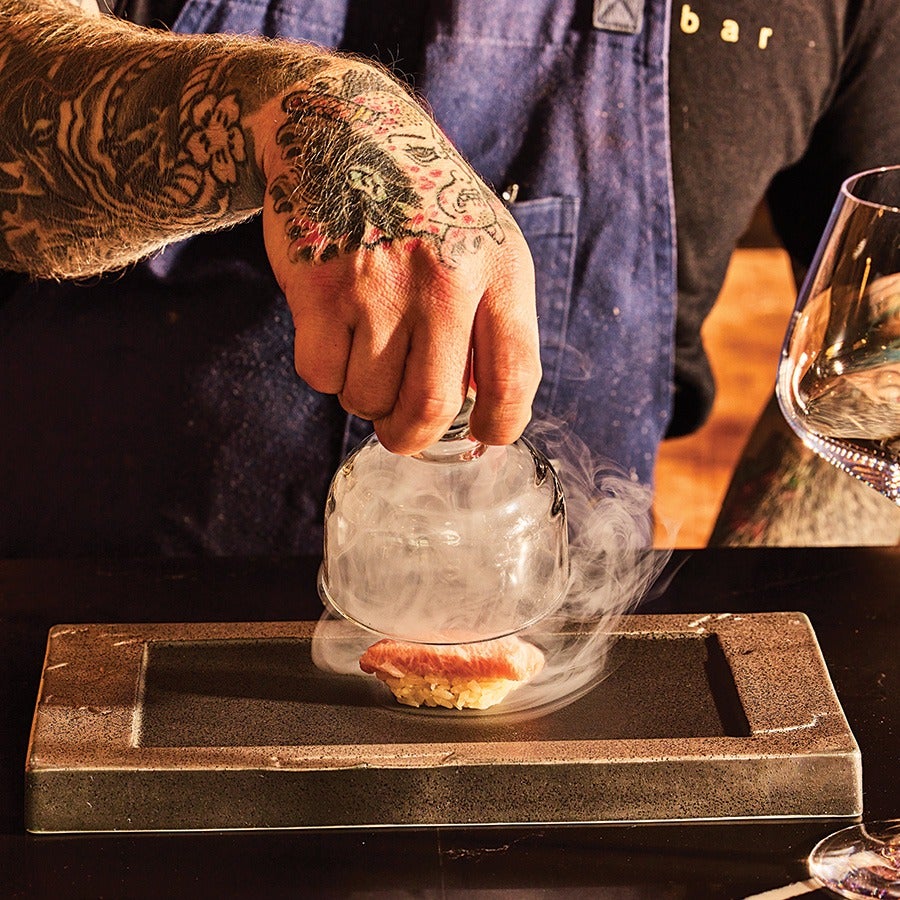
XOXO Sushi Bar. / Photo by Joe St. Pierre
The Fish: Jukusei sushi is the name of the game, with Stritchko carefully dry-aging much of the seafood. The method is meant to bring out umami flavors, which you’ll discover while indulging in melt-in-your-mouth 33-day-aged chu-toro, for instance.
The Damage: $195 for 16 courses, plus tax and 20 percent gratuity, paid at booking. For the full ride, add $195 for the beverage pairing—a thrilling combo of sake, Japanese whisky, and wine—or go with smaller flights and à la carte options.
The Reservation: Reservations are only available for one seating per night, Tuesday through Thursday, up to six people—so book in advance if it’s a special occasion.
1154 Boylston St., Chestnut Hill, 617-505-3378, xoxosushi.com.
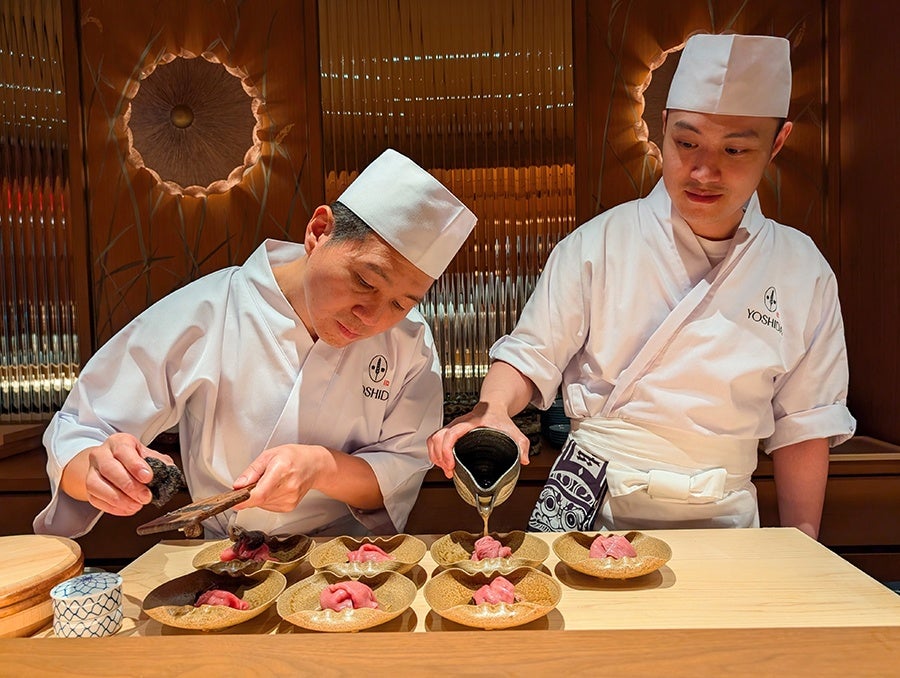
Chefs prepare a wagyu, truffle, and maitake appetizer at Yoshida. / Photo by Rachel Leah Blumenthal
Yoshida Omakase (Back Bay)
The Chef: With more than 20 years of experience, including at the Edomae-style Sushi Yugen in New York City, chef Tony Cao brings that tradition’s restraint and precision to the Back Bay. And he’s clearly having a blast doing it—watch him grin while presenting, say, a box of rolled wagyu slices and truffle.
Come Here When: You want to soak up luxury inside a restaurant where no expense was spared—ingredients, décor, the works. It’s the kind of place where a $1,000-plus bottle of sake doesn’t look out of place.
The Vibe: Everything here whispers money, from the gorgeous cut-crystal sake carafes to the branded cloth napkins to the cozily thick-cushioned seats. The details are everything.
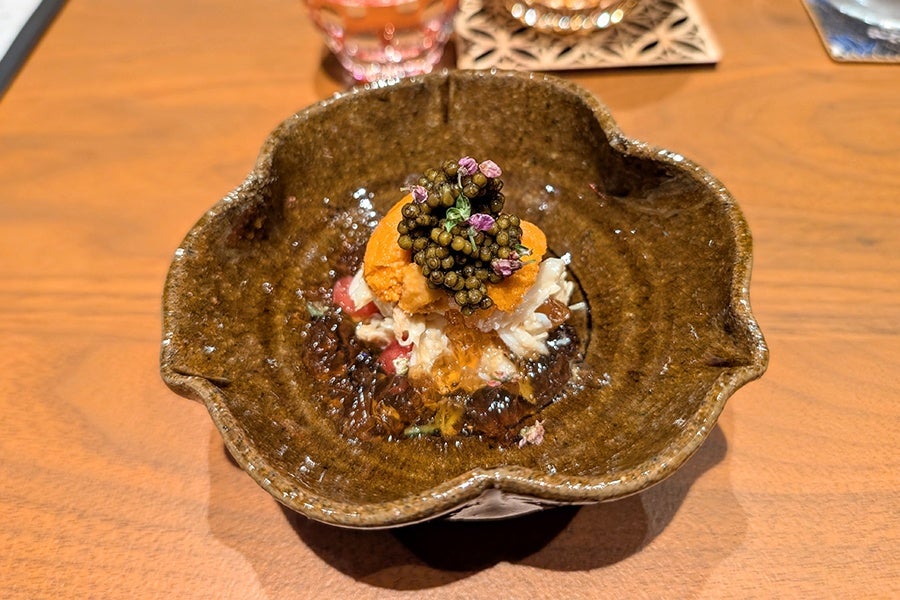
Crystal crab and Hokkaido uni at Yoshida. / Photo by Rachel Leah Blumenthal
The Fish: Playful appetizers (like red shrimp and shiso tempura with prosciutto) give way to a parade of pristine, barely garnished nigiri that lets the fish do the talking. On a late-summer visit, we got acquainted with the fatty richness of the deep-sea-dwelling blackthroat sea perch and worked our way through three different cuts of 14-day-aged tuna.
The Damage: One of the priciest omakase tickets in town at $301 per person, paid when booking.
The Reservation: Yoshida is open six nights a week, so reservations aren’t the knife fight you might expect.
51 Massachusetts Ave., Back Bay, Boston, yoshidaomakase.com.
This article was first published in the print edition of the March 2026 issue with the headline, “Oh My Omakase.”